
Wood pellets are the fuel that makes low-and-slow magic happen - but two questions come up over and over. How fast will my grill burn through a bag? And is that half-open sack in the garage still any good? Let's answer both, plus exactly how to store pellets so they last for years instead of turning to mush.
Jump to:
- How long do wood pellets last? (Quick answer)
- Understanding wood pellet consumption
- How long does a 20 lb bag of pellets last?
- Do wood pellets go bad or expire?
- How to tell if pellets have gone bad
- Can you use wet wood pellets?
- How to store wood pellets to make them last
- Choosing the right pellets
- A few final tips
- 💬 Comments
How long do wood pellets last? (Quick answer)
On a cook, most pellet grills burn roughly 1 to 3 pounds of pellets per hour depending on temperature - less when you're smoking low, more when you're cranking the heat. In storage, sealed pellets kept cool and dry stay good for 3 to 5 years; the second they get damp, they're done. Here's the usage breakdown:
| Grill temperature | Approx. pellets per hour |
|---|---|
| 225°F (low & slow / smoke) | ½–1 lb |
| 350°F (medium) | 1½–2 lbs |
| 400°F+ (high / grilling) | 2–3 lbs |
Understanding wood pellet consumption
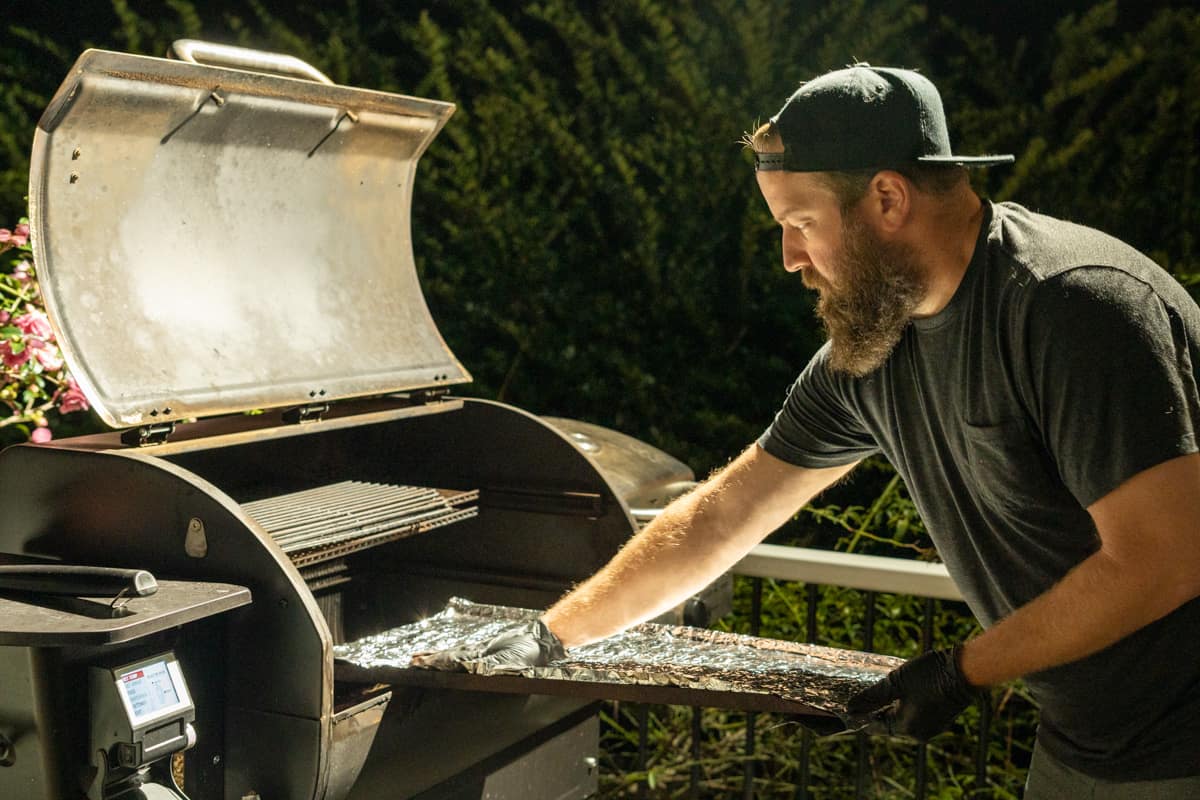
Temperature is the biggest factor, but not the only one. Cold, windy weather makes your grill work harder to hold temp, so it eats more pellets. A well-insulated grill (or a thermal blanket in winter) sips instead of gulps. And every time you open the lid, you're bleeding heat the auger has to replace.
How long does a 20 lb bag of pellets last?
Do the math on the table above and a 20-pound bag gives you roughly 6 to 20+ hours of cook time. Smoking a brisket at 225°F? That bag will stretch across several sessions. Grilling hot? You might go through it in an afternoon. If you cook often, buying in bulk is cheaper - just store it right (more on that next).
Do wood pellets go bad or expire?
Pellets don't have a true expiration date, but they absolutely degrade. Kept cool and dry, they're good for years. Their one mortal enemy is moisture: pellets are just compressed sawdust held together by the wood's natural lignin, and humidity breaks that bond fast.

How to tell if pellets have gone bad
Good pellets are hard, glossy, and rattle like little sticks. Bad ones swell up, feel soft, crumble into sawdust, or smell musty. If you can crush one to dust between your fingers, the whole bag is likely shot.
Can you use wet wood pellets?
No - and this one matters. Once pellets absorb moisture they fall apart into sawdust, which won't feed through the auger and can jam or even damage your smoker. Toss any swollen or crumbly pellets and start with a dry bag.
I learned this one the hard way - more than once. Back when our smoker sat uncovered, I'd lift the hopper lid and find the pellets swollen up like soggy cereal. Whole hopper, gone. Ever since we started keeping the smoker covered and cooking on it at least monthly, leaving pellets in the hopper hasn't been an issue at all.
How to store wood pellets to make them last
- Move pellets into an airtight, sealable container - a lidded bucket or bin beats a folded-over bag.
- Keep them somewhere cool, dry, and out of direct sunlight. Avoid damp basements and garages that flood.
- Label containers by wood flavor so you're not guessing.
- Empty leftover pellets out of your hopper after each cook - the hopper isn't weatherproof, and sitting pellets soak up humidity.
What we actually do at home: during grilling season, with the smoker covered and getting used monthly, the pellets just live in the hopper. In the off-season - or when I'm juggling multiple wood flavors - they go into a plastic bin with a lid and they keep just fine.
Choosing the right pellets
Milder woods like apple, cherry, and pecan are sweet and forgiving - great for pork and poultry. Hickory and mesquite are bold and best for beef and when you want that punch-you-in-the-face smoke. A blend is a safe everyday bag. Whatever you buy, 100% hardwood pellets burn cleaner and more consistently than filler-heavy budget brands.
A few final tips
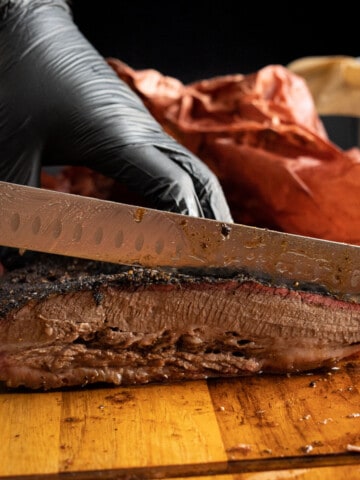
Buy what you'll realistically use in a season or two, keep a moisture-proof scoop in your bin, and give your hopper a quick look before every cook. A long brisket day burns a surprising amount of fuel, so start with a full hopper - see my guide to pellet smoker brisket for a real-world example. New to all of this? Start with my beginner pellet smoker recipes, and keep things running clean with my pellet grill cleaning guide.




Comments
No Comments