
Somewhere in the first week of October, my kitchen changes jobs. The grill stops being a weekend thing and becomes a Sunday thing. The Dutch oven comes down off the high shelf and doesn't go back up until March. And I start doing math in my head at 5pm - how long do carrots need, is that squash going to be done before the chicken, how much chili do I actually need to freeze so we're not eating it four nights running.
So I wrote it all down. The Fall Kitchen Companion is a free 9-page printable - a roasting chart that lists cut sizes instead of just times, a freezer inventory with labels you cut out, an apple cheat sheet that finally settles which apples turn to mush, a smoke log worth keeping, a fall baking list, and two coloring pages for whoever wanders into the kitchen wanting a job. It's the October drop of Table Notes.
Free printable · October
🍂 Get the Fall Kitchen Companion
Drop your email, click the confirm button I send you, and all nine pages land - roasting chart, freezer inventory, cut-out labels, apple cheat sheet, smoke log, baking list, and two coloring pages.
No daily emails, no "just checking in." One printable a month, plus the occasional recipe worth interrupting you for. Unsubscribe anytime - no hard feelings.
What's inside the Fall Kitchen Companion
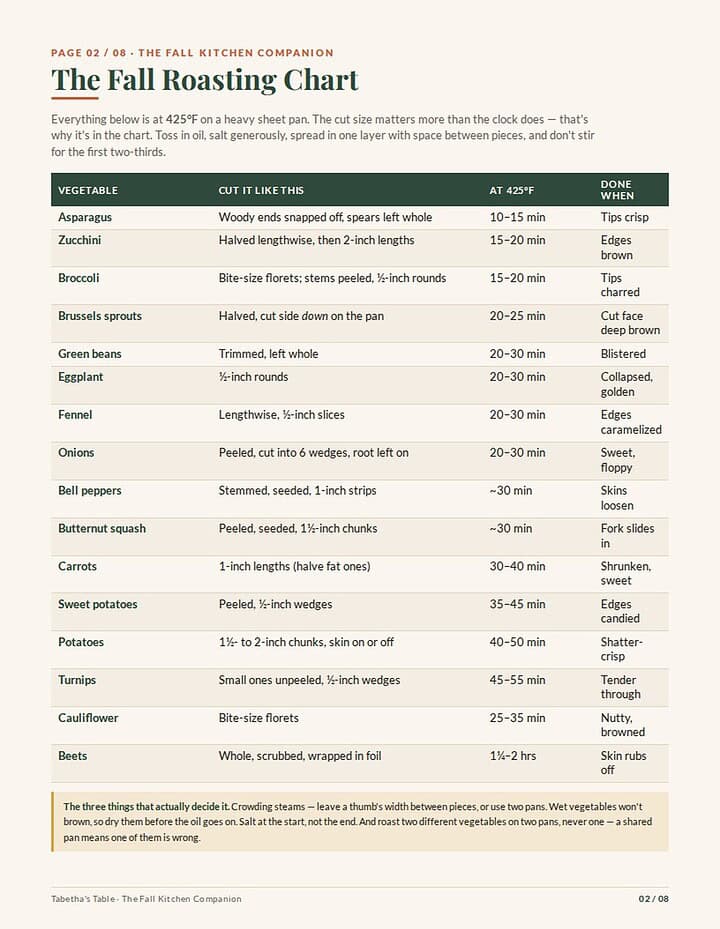
The Fall Roasting Chart
Most roasting charts give you a temperature and a time and leave out the part that actually decides the outcome: how big you cut the thing. Butternut squash in 1½-inch chunks is done in about 30 minutes. The same squash in half-inch cubes is done in half that and turns to paste if you walk away. So this chart lists the cut, the time at 425°F, and what it should look like when it's ready.
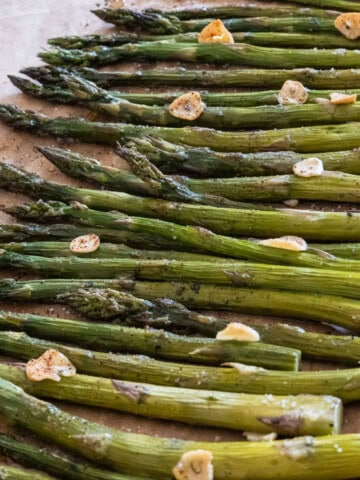
Sixteen vegetables, from asparagus at 10 minutes to whole beets at nearly two hours. Plus the three things that matter more than any number on the page: don't crowd the pan, dry the vegetables before the oil goes on, and salt at the beginning rather than the end.
Soup & Chili Freezer Inventory (plus cut-out labels)
Sixteen lines to fill in - what it is, date, servings, container, use-by, and a box to cross off when it's gone. It goes inside a cabinet door, not on the freezer itself, because freezer doors are cold and tape gives up.
Page four is twelve cut-out labels. Write on them before the container goes in the freezer. Nothing adheres to a frosty tub, and nobody alive can identify frozen chili by looking at it.
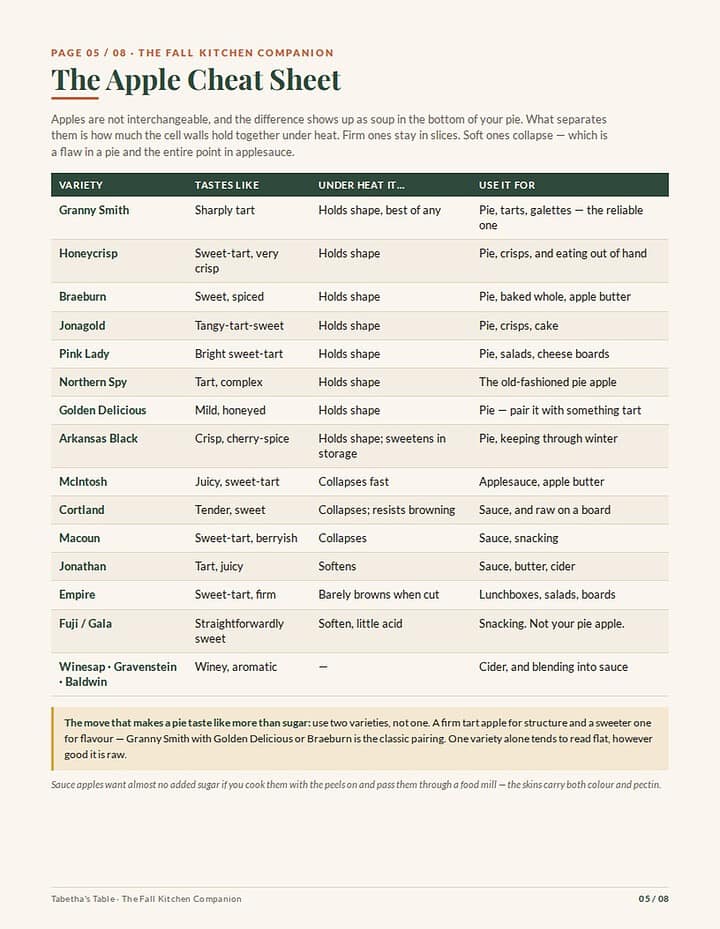
The Apple Cheat Sheet
Fifteen varieties sorted by what they do under heat, because that's the only thing that matters once the oven is on. Granny Smith, Honeycrisp, Braeburn, Jonagold, Northern Spy and friends hold their shape - those are your pie apples. McIntosh, Macoun, Cortland and Jonathan collapse, which is a disaster in a pie and exactly what you want in applesauce.
The Smoke Log
Eleven rows: date, cut and weight, pellets, grill temp, pull temp, total time, and what you'd change. After about six entries you stop guessing what your particular grill does and start knowing.
It also carries both sets of numbers, because they're different and people mix them up. Safe temperatures are USDA minimums - 165°F for poultry, 160°F for ground meat, 145°F plus a 3-minute rest for whole cuts. Tender temperatures are the other thing entirely: pork shoulder and brisket want 200-205°F, well past safe, because that's where collagen finally melts into gelatin.
The baking list and the coloring pages
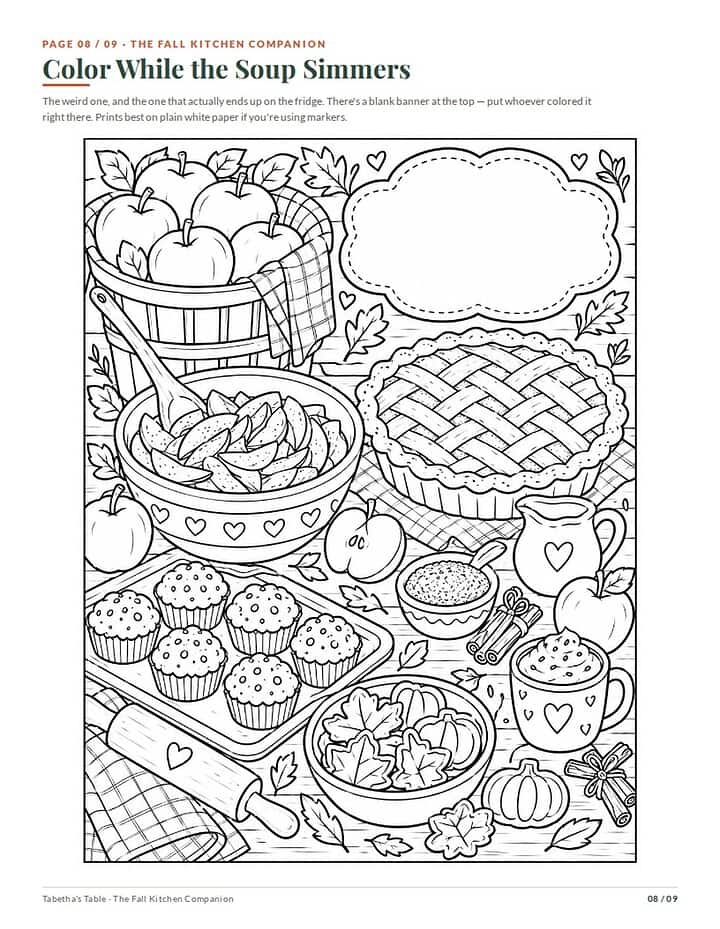
Twenty-one things worth baking before the season's over, with six blank lines at the bottom because your family has one that isn't on anyone else's list. Then two coloring pages, both apple-season scenes worth the good markers - baskets, a lattice pie, muffins, cinnamon, the works. The first has a blank banner across the top so whoever colors it can sign their name. These are the pages that end up on the fridge.
How Table Notes works
One free kitchen printable on the 1st of every month. Not clip-art freebies - chef-built tools you can actually write on with a pen while something simmers. Drop your email above, click the confirm button, and the PDF opens straight away.
November's is The Thanksgiving Command Center, and if you've ever tried to land five dishes hot at the same time, the oven and burner schedule grid is the page you've been missing.
Recipes that go with it
The printable is the planning half. Here's the cooking half:
- My Dutch oven chili - the one that fills the freezer inventory fastest
- Italian sausage and tortellini soup - freezes well, thaws better
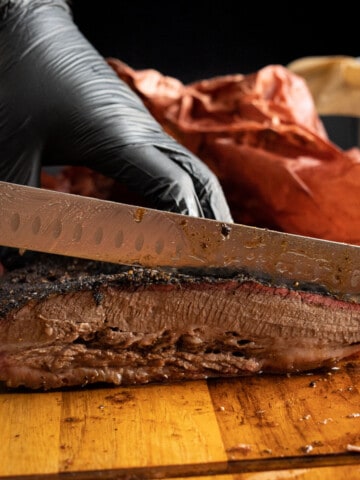
- Everything I cook on my pellet smoker - the smoke log's natural habitat
- Smoked vegetables - when you want the roasting chart's smokier cousin
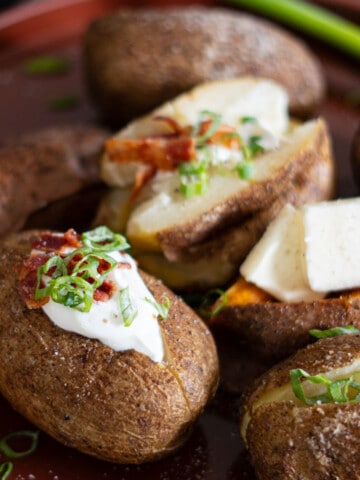
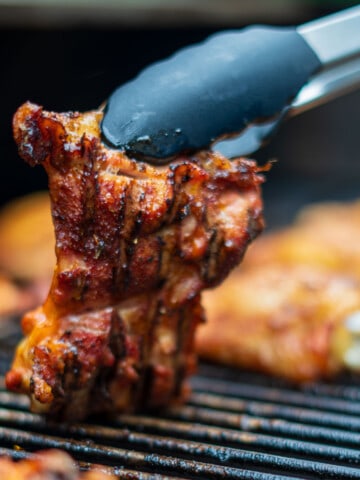
- Smoked baked potatoes and smoked chicken thighs - good first entries in a new log
- Cream cheese pumpkin pie, on a proper pâte brisée crust - for the baking list
- What to know about your Dutch oven - before soup season really starts
Questions people actually ask
How long does soup or chili really last in the freezer?
Two to three months for best quality, and three to four days in the fridge. Worth knowing: food held at a constant 0°F stays safe indefinitely - freezing puts microbes to sleep rather than killing them. Those month ranges are about texture and flavor, not safety. Past them it's still safe to eat, it just won't taste like it did going in.
What temperature should I roast vegetables at?
425°F for almost everything. Hot enough to brown the outside before the inside overcooks, not so hot that the edges scorch while the middle is still raw. The chart uses 425°F throughout so you can roast two things at once without doing conversions - just give them separate pans and pull each on its own schedule.
Which apples are best for pie?
Granny Smith holds its shape better than any other common variety, which is why it's the default. But one variety alone tends to taste flat. Use two - a firm tart apple for structure and a sweeter one for flavor. Granny Smith with Golden Delicious, or Granny Smith with Braeburn, is the pairing I come back to.
Why did my brisket stop climbing in temperature?
That's the stall, and it's normal. Somewhere around 150-170°F, moisture evaporating off the surface cools the meat as fast as the grill heats it, and the temperature parks there for hours. Wrap it to push through, or wait it out. Do not turn the grill up - that's how a brisket ends up dry and tough.
Do I need a special printer?
No. It's standard 8.5×11 US Letter, designed on a cream background with no heavy ink coverage, so it won't drain a cartridge. The coloring pages print best on plain white paper if you're using markers.
Grab it above - it's free, it's nine pages, and by November you'll have a freezer you can actually read. Table Notes is open to everyone.



Comments
No Comments