
Your pellet grill does the heavy lifting on every cook, so it earns a little upkeep in return. The good news: keeping it clean isn't hard, and it does two big things - it keeps your food tasting like the food (not last week's salmon) and it prevents grease fires. Here's exactly how to clean a pellet grill, and how often each job actually needs doing.
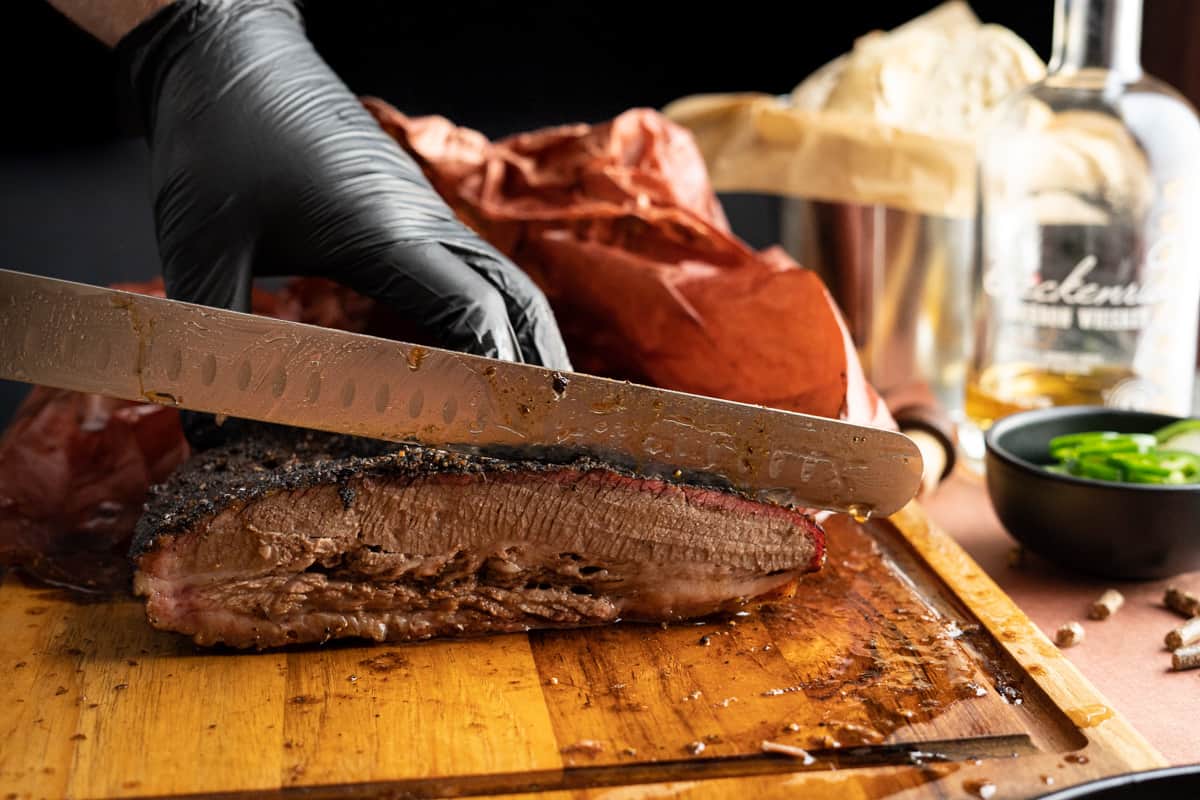
Chef's note · Every third or fourth cook, sooner after brisket or anything saucy. Burnt-on drippings add flavor to the next cook, and not always the flavor you wanted.
Jump to:
How often should you clean your pellet grill?
Short version: a quick wipe after every cook, a deep clean every handful of cooks. Here's the cheat sheet:
| Task | How often |
|---|---|
| Brush the grill grates | After every cook |
| Empty the grease tray / bucket | After every cook (check it) |
| Clear ash from the fire pot | Every 2–5 cooks |
| Deep clean the interior & hopper | Every 20–50 cooking hours |
| Wipe down the exterior | As needed |
Cook a lot of fatty cuts - brisket, pork butt, bacon-wrapped anything? Lean toward the more-often end of that range.
My personal rule at home: I clean mine every third or fourth use - sooner if the last cook was a brisket or anything saucy. Those burnt-on drippings will absolutely add flavor to your next cook, and not always the flavor you wanted. So here's how I decide: need it perfect? Clean it. Making something delicate like salmon? Clean it.
What you'll need
- A nylon grill brush or scraper
- A shop vac (the fastest way to deal with ash)
- A putty knife or scraper for baked-on gunk
- Warm water and mild dish soap
- Rags or paper towels, and fresh drip-tray foil
Skip the oven cleaner and harsh degreasers on the interior - mild soap and elbow grease are all you want touching the surfaces your food sits on.
How to clean a pellet grill step by step
1. Grill grates
Brush the grates while the grill is still warm (not screaming hot) - gunk lifts off far easier than when it's cold and welded on. For a deeper clean, pull the grates and wash them with warm, soapy water, then dry completely.
2. Interior, drip tray & grease
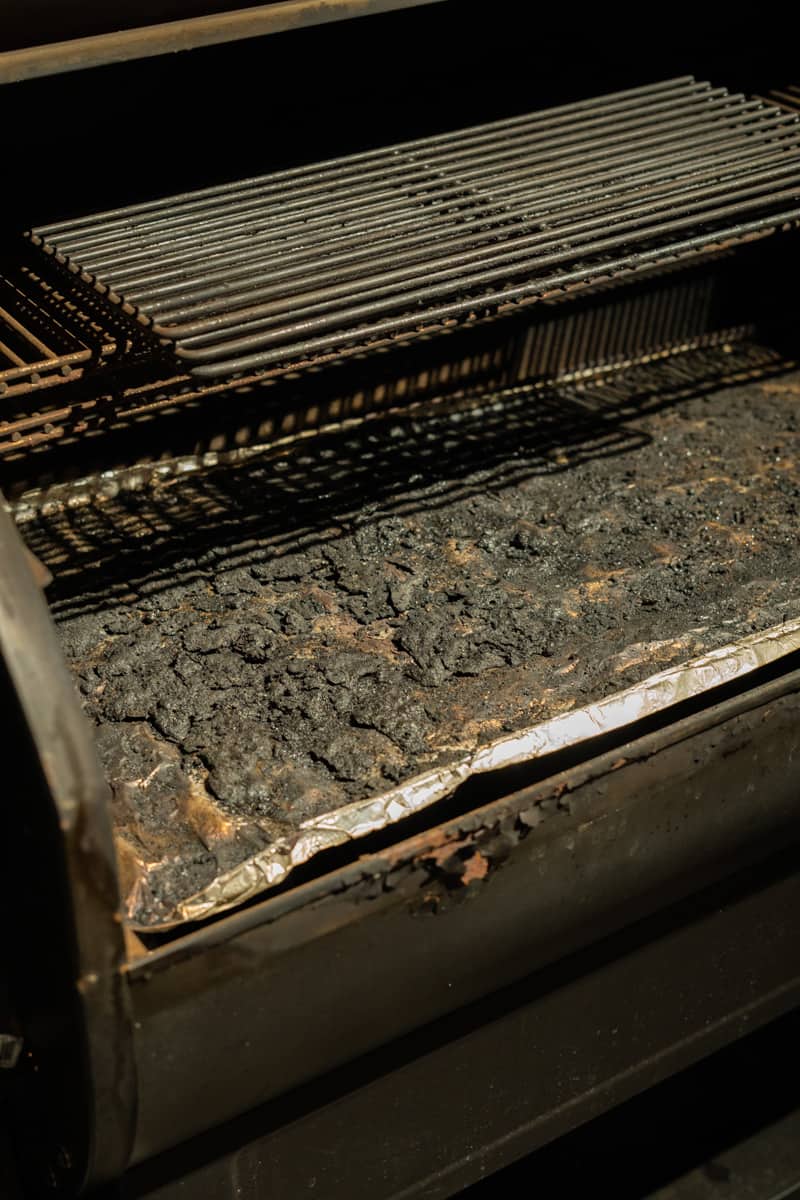
Remove the grates and heat deflector, scrape the built-up grease and crud off the interior walls and drip tray, then vacuum out the loose debris. Wash removable parts, dry them, and re-foil the drip tray so next time's cleanup is a two-second job.
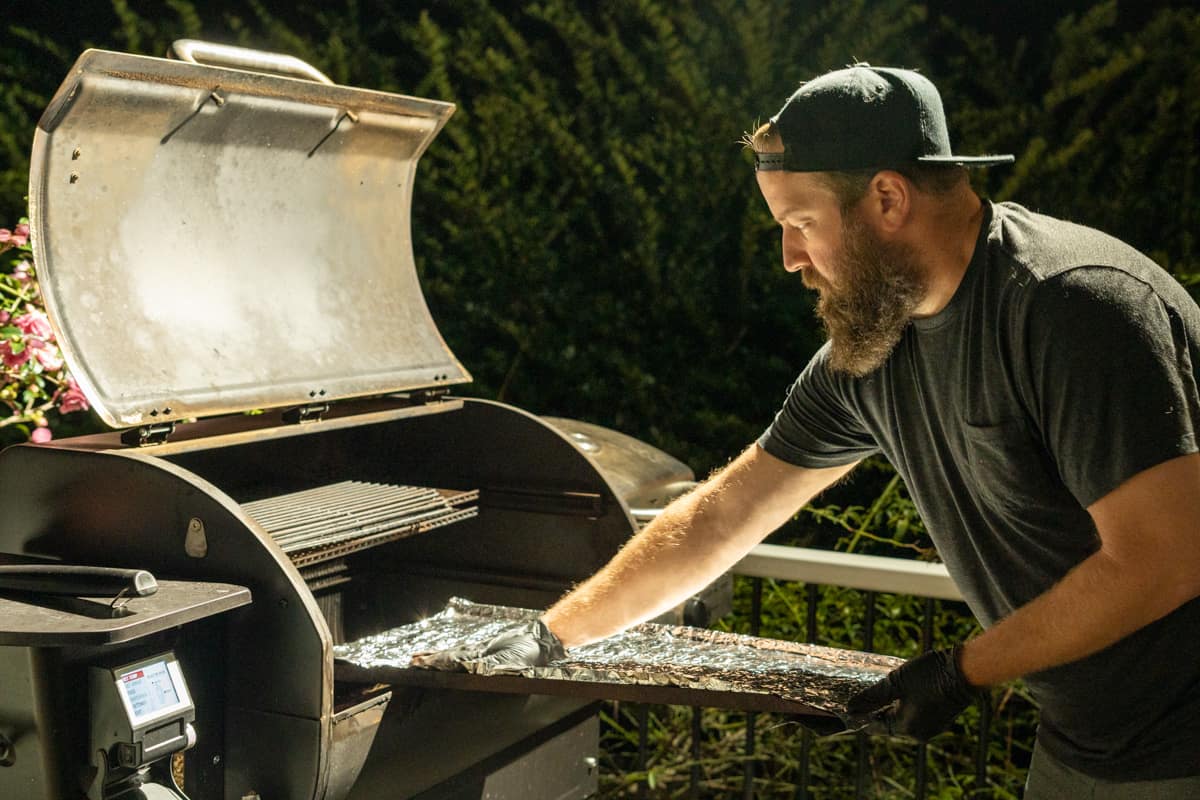
3. Fire pot & hopper
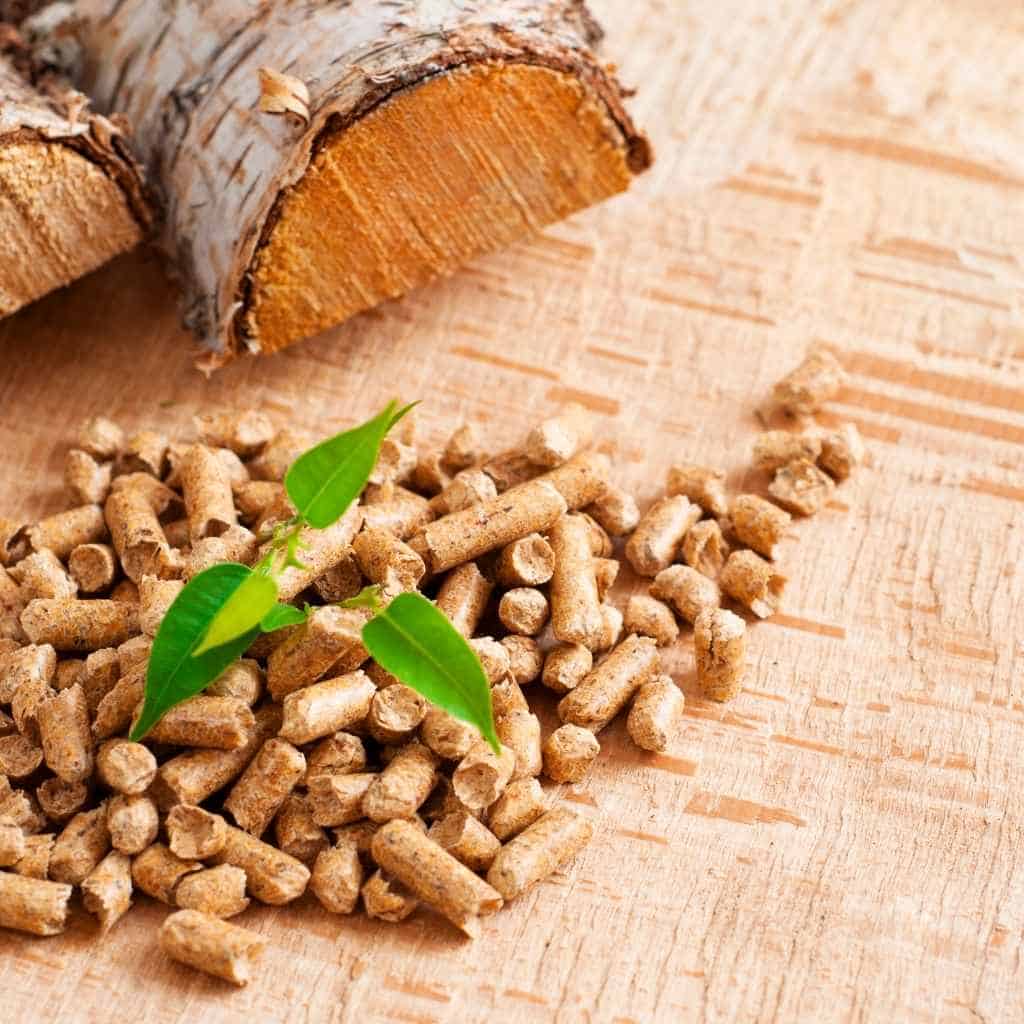
Vacuum the ash out of the fire pot so airflow stays strong and your temps stay steady. If you're storing the grill or switching wood flavors, empty leftover pellets from the hopper too - sitting pellets soak up humidity (here's how long pellets really last and how to store them).
4. Exterior
Wipe the lid and body with warm soapy water, buff stainless steel with the grain, and give the whole thing a good look-over for anything that needs attention. A snug grill cover keeps rain, dust, and UV off between cooks.
How to prevent grease fires
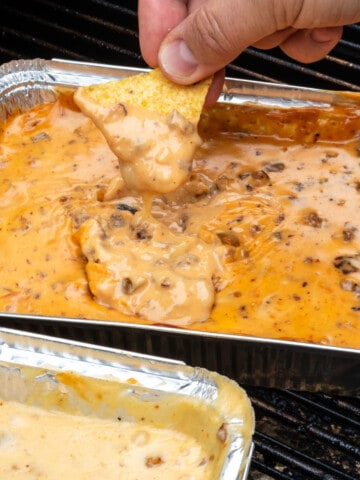
Grease and ash buildup are the two main causes of pellet grill flare-ups, and both are completely preventable. Empty the grease bucket regularly, re-foil the drip tray, and keep the fire pot clear of ash. That quick post-cook check is the cheapest insurance you'll ever buy - especially before a long, fatty cook like pellet smoker brisket or a tray of smoked queso dip.
Finishing up: the burn-off
Once everything's back together, run the grill hot (around 350-400°F) for 10-15 minutes with the lid closed. This burns off any residue, dries out moisture, and gets you a clean cooking surface for next time. Then you're ready to roll.
Final thoughts
Five minutes after each cook and a deeper clean every few sessions is all it takes to keep your grill safe, running steady, and making food that tastes the way it should. New to the smoker life? Start with my beginner pellet smoker recipes and build the habit early.
Frequently asked questions
Quick-clean after every cook - brush the grates and empty the grease tray. Deep clean the interior, fire pot, and hopper every 20-50 cooking hours (about every 2-5 cooks), or sooner if you smoke fatty cuts often. Regular cleaning prevents grease fires and keeps temps steady.
No. The force and water can damage electrical components, the auger, and interior finishes. Stick to a nylon brush, warm soapy water, a shop vac, and a putty knife for scraping. Never soak the electrical parts.
Clear it every few cooks, or whenever ash builds up noticeably. Too much ash blocks airflow, causes temperature swings, and can smother the fire. Vacuuming it out is the fastest, cleanest method.
Not a full deep clean - but yes to the basics. Brush the grates while warm and check the grease tray after each cook. This five-minute habit prevents flare-ups and keeps old grease from tainting your next meal.
Empty the grease bucket regularly, re-foil the drip tray, and keep the fire pot free of ash. Grease and ash buildup are the main causes of flare-ups. A quick post-cook wipe-down is your best insurance.
Yes. A snug, quality cover protects against rain, snow, dust, and UV, and keeps moisture away from your hopper and electronics - extending the life of your grill.





Comments
No Comments