
This post may contain affiliate links. As an Amazon Associate I earn from qualifying purchases.
Everyone has an opinion on this one. And honestly? Most of them are wrong.
Gelato and ice cream are not just "the same thing with a fancy name." They're made differently, served differently, and they taste different - even when the flavor is identical. Once you understand why, you can never un-know it. In the best possible way.
I've made both from scratch more times than I can count, and the science behind them is genuinely fascinating. Let me break it all down.
And if you think the difference doesn't matter, let me tell you about a kid named Thor. I taught a summer cooking camp, and one week we made chocolate cream pie. Thor took over the whole recipe - ran every step himself - and then, when it was finally time to eat, refused a single bite. His reason? "I don't like chocolate, I only like gellllaaatttto." Delivered in the smuggest little-boy voice you've ever heard. If a kid at summer camp has that strong a gelato opinion, the rest of us can learn the difference too.
Chef's note · Less fat, more flavor. Fat coats your tongue and slows everything down, which is why gelato at 4-8% fat tastes louder than ice cream at 10-18%.
Jump to:
Gelato vs Ice Cream: At a Glance
Before we get into the details, here's the quick side-by-side. Bookmark this - it's the chart everyone is Googling and nobody makes clear enough.
| Feature | Gelato | Ice Cream |
|---|---|---|
| Milk vs. Cream base | Mostly whole milk, less cream | Mostly heavy cream |
| Fat content | 4–8% | 10–18%+ |
| Egg yolks | Usually yes (custard base) | Sometimes, varies |
| Air churned in (overrun) | Less than 25% | 25–100% |
| Serving temperature | ~10–22°F (-12 to -6°C) | ~6°F (-14°C) |
| Texture | Dense, silky, stretchy | Light, creamy, fluffy |
| Flavor intensity | Bolder, brighter | Richer, more indulgent |
The 6 Key Differences Between Gelato and Ice Cream
1. Fat Content
This is the foundational difference. American-style ice cream gets its richness from a heavy cream base - fat content is typically 10-18%, and premium brands push even higher. Gelato flips the ratio: it uses mostly whole milk with just a small amount of cream, landing around 4-8% fat.
Here's the counterintuitive part: lower fat actually means more flavor. Fat coats your taste receptors and slows down the flavor release. With less fat in the way, gelato's ingredients - vanilla, pistachio, lemon, hazelnut - hit your palate faster and more directly. That's why a great pistachio gelato tastes like you're eating actual pistachios, not a pistachio-flavored thing.
2. Air Content (Overrun)
"Overrun" is the industry term for how much air gets churned into a frozen dessert during production. It's expressed as a percentage: 100% overrun means the final product is half air by volume.
Ice cream typically runs 25-100% overrun. That's why a pint of cheap ice cream can feel almost fluffy - you're paying for a lot of air. Premium brands stay below 50%. Gelato is churned at a slower speed and tops out around 20-25% overrun. The result is a denser, heavier product that costs more to make but delivers a much more concentrated eating experience.
3. Egg Yolks
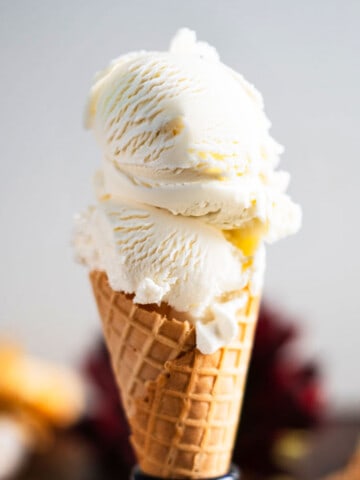
Traditional gelato recipes include egg yolks as an emulsifier and thickener. This gives gelato that characteristic slightly stretchy, almost pudding-like texture - especially in freshly-made batches from a good gelateria. The egg yolks also add a subtle richness that compensates for the lower cream content.
American ice cream sometimes includes egg yolks (that version is called a "French-style" or custard-based ice cream), but many commercial recipes skip them entirely and rely on stabilizers like guar gum, carrageenan, or carob bean gum instead. Homemade? You can go either way - the recipe below gives you a proper egg-yolk gelato base.
4. Serving Temperature
This is the difference you feel before you even taste it. Gelato is served warmer - typically between 10°F and 22°F (-12°C to -6°C). Ice cream is served colder, usually around 6°F (-14°C).
Why does this matter? At colder temperatures, your taste receptors are partially numbed. Ice cream needs to warm up slightly in your mouth before the full flavor comes through. Gelato hits you immediately. It's softer, more pliable, and the flavor is front-loaded. This is also why gelato melts faster on a hot day - that's not a bug, it's a feature of the warmer serving temp.
5. Churning Speed and Texture
Ice cream machines churn fast - the goal is to incorporate air quickly and freeze the base before large ice crystals form. Gelato churns slowly, which means less air incorporation and smaller, more uniform ice crystals. The result is that signature silky-smooth, almost stretchy texture you get from a proper gelateria.
When you make gelato at home in a standard ice cream machine, you're approximating this - most home machines don't have a slow enough setting to truly replicate it. The recipe below is written to work with what you have.
6. Ingredients and Additives
Authentic artisan gelato uses fresh milk, fresh fruit or high-quality flavoring, egg yolks, and minimal stabilizers. Commercial ice cream often includes artificial flavors, stabilizer blends, and emulsifiers to extend shelf life and maintain texture through temperature fluctuations during shipping and storage.
This is where supermarket gelato (looking at you, Talenti) diverges from the real deal. It's good - I buy it too, no shame - but it's shelf-stabilized to survive distribution. Fresh-made gelato from a proper shop is in a different category entirely.
Homemade Vanilla Ice Cream (The Easy Version)
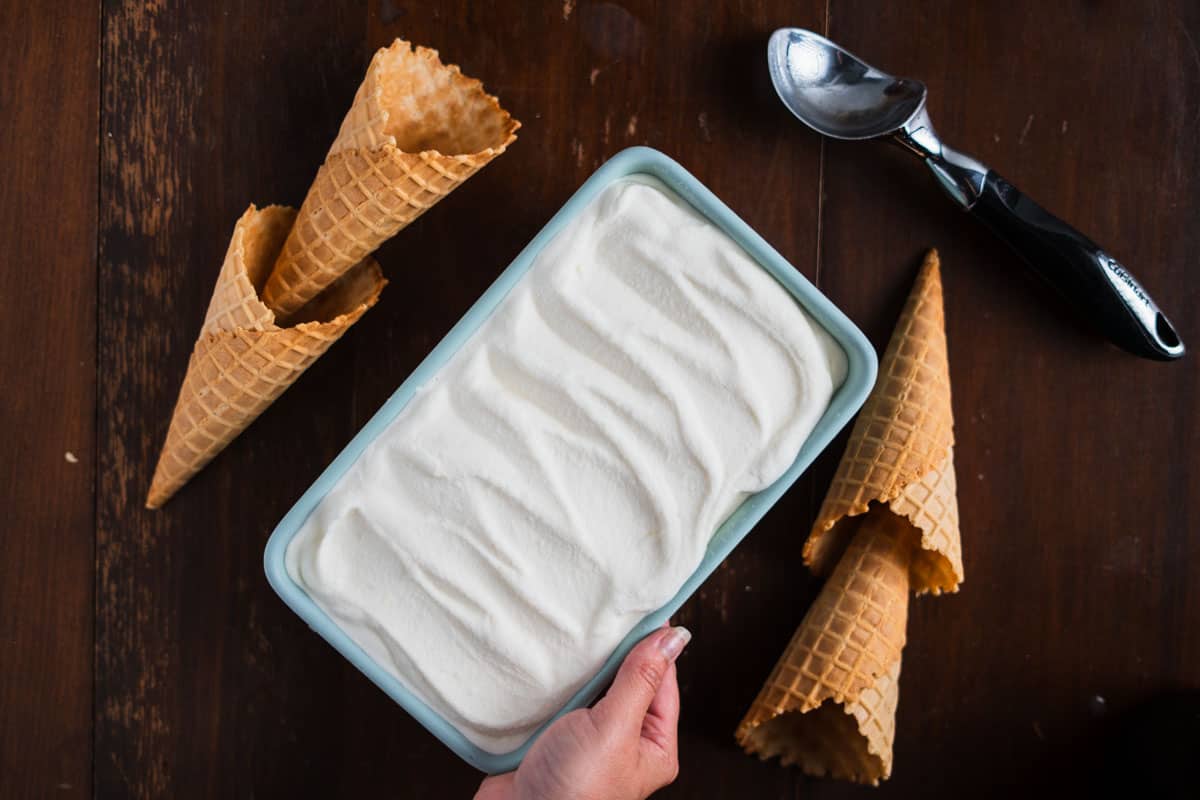
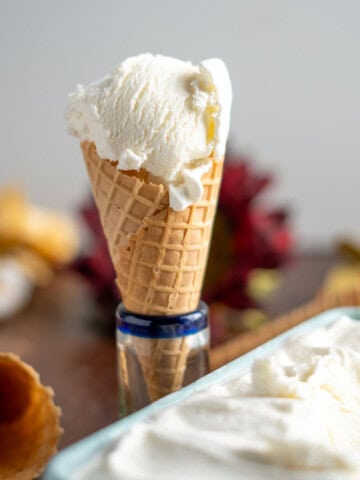
This is my go-to base. No cooking, no tempering, no eggs - just mix, churn, freeze. It's the recipe I made my first week with the KitchenAid ice cream bowl and I've never felt the need to change it. Creamy, scoopable, and ready for whatever mix-ins you're feeling.
→ Get the full recipe with tips and variations here
Ingredients
- 2 cups whole milk
- 2 cups heavy cream
- 1 cup granulated sugar
- 2 teaspoons vanilla paste (or 1 teaspoon vanilla extract)
- 1 pinch kosher salt
Instructions
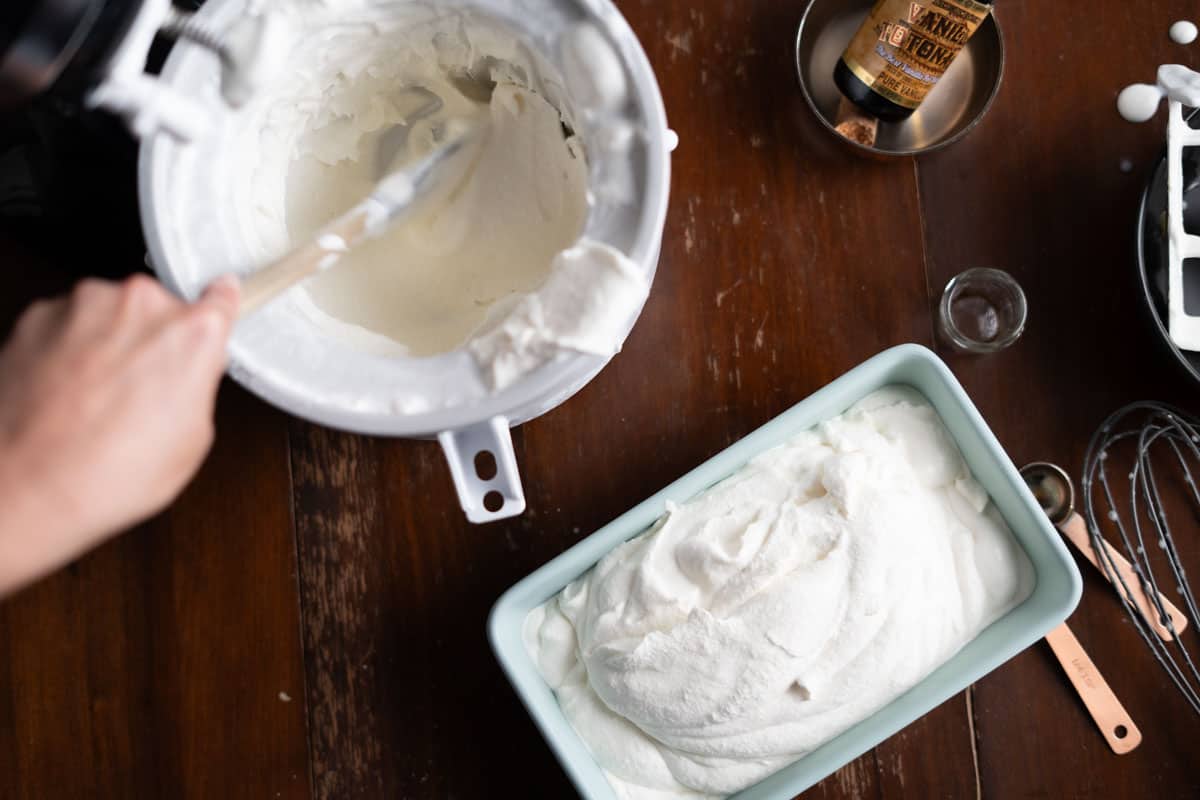
- Combine all ingredients and stir until the sugar is fully dissolved - take your time here, undissolved sugar = gritty ice cream.
- Attach the ice cream bowl to your KitchenAid and set to the lowest speed.
- Pour the base slowly down the inside edge of the bowl while it's running.
- Churn 15-20 minutes until it looks like it's about to overflow.
- Eat immediately as soft-serve, or transfer to a freezer-safe container and freeze 2-4 hours for scoopable texture.
Authentic Vanilla Gelato Recipe
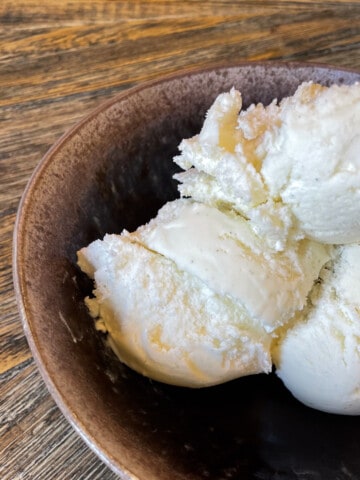
This one requires a little more patience - you're making a proper custard base, which means cooking egg yolks and tempering them into hot milk. Don't let that intimidate you. It's two steps, and I'll walk you through exactly where people mess it up.
📖 Recipe
Authentic Vanilla Gelato
Equipment
- Saucepan
- Fine-Mesh Sieve
Ingredients
- 2 cups whole milk
- ½ cup heavy cream
- ¾ cup granulated sugar
- 4 large egg yolks
- 1 teaspoon vanilla extract - or ½ vanilla bean, scraped
Instructions
- Heat milk and cream in a saucepan over medium heat until steaming - you want small bubbles around the edge, not a rolling boil.
- In a bowl, whisk sugar and egg yolks together until the mixture turns pale yellow and slightly thick, about 2 minutes.
- Temper the eggs: slowly ladle the hot milk mixture into the yolks a little at a time, whisking constantly. This is where scrambled eggs happen if you rush it - go slow.
- Pour the whole mixture back into the saucepan and cook over low heat, stirring constantly with a wooden spoon or silicone spatula, until it coats the back of the spoon. This is your anglaise. Pull it at 170-175°F if you have a thermometer.
- Remove from heat, stir in vanilla, and strain through a fine-mesh sieve into a clean bowl.
- Press plastic wrap directly onto the surface of the custard and refrigerate until completely cold - at least 4 hours, overnight is better.
- Churn in your ice cream maker per manufacturer instructions, usually 20-25 minutes.
- Transfer to a container and freeze at least 2 hours before serving. For proper gelato texture, let it sit at room temperature for 3-5 minutes before scooping.
Notes
Nutrition
Nutrition information is an estimate, calculated from the listed ingredients, and provided as a courtesy.
Common Mistakes to Avoid
- Skipping the temper: Adding hot milk directly to egg yolks = scrambled eggs. Always go slow.
- Overcooking the custard: Pull it when it coats the spoon. If you see it starting to curdle at the edges, take it off the heat immediately and strain it fast.
- Churning warm custard: The base must be fully cold before it hits the machine. Warm base = soupy gelato that never sets properly.
- Skipping the rest time before serving: Straight from the freezer it'll be too hard. Give it a few minutes - that warmer serving temp is part of what makes gelato, gelato.
Which One Should You Make?
Depends entirely on what you're going for.
Make ice cream when you want something lush, rich, and classic - especially with mix-ins, swirls, or bold toppings. The lighter texture means it plays well with chunky additions without feeling heavy. Also make it when you don't want to deal with a stove. The no-cook method above is genuinely just five ingredients and a bowl.
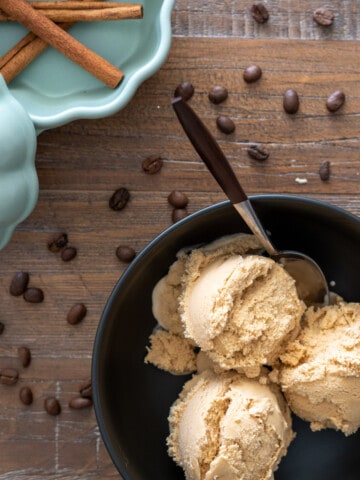
Make gelato when the flavor is the entire point. Strawberry, pistachio, salted caramel, lemon - anything where you want that ingredient to absolutely dominate. Gelato's lower fat and denser texture makes it a vehicle for flavor in a way ice cream isn't. It's also better in affogato, because it doesn't disappear in the espresso.
Related Reading
Going deep on frozen desserts? These are the posts to read next:
- Everything from sherbet to kulfi: Types of Ice Cream - 10 Varieties Explained
- The full step-by-step with tips and variations: Making Vanilla Ice Cream in Your KitchenAid
- A wilder vanilla: Easy Mexican Vanilla Ice Cream
FAQ: Gelato vs Ice Cream
The biggest differences are fat content, air content, and serving temperature. Gelato uses mostly whole milk (lower fat), is churned with less air (denser), and is served warmer than ice cream. The result is a richer flavor impact with a silkier, denser texture.
Generally yes - traditional gelato recipes use less sugar than commercial ice cream, which helps the natural flavors come through more clearly rather than a blanket sweetness.
Gelato is typically served between 10-22°F (-12 to -6°C), while ice cream is served around 6°F (-14°C). The warmer temperature keeps gelato soft and scoopable while also ensuring the flavor hits your palate immediately rather than after it warms in your mouth.
Gelato has less fat than most commercial ice cream, but it still contains sugar and dairy. Whether one is "healthier" depends on the specific recipe and portion size - they're both desserts. Gelato does tend to have fewer artificial stabilizers and additives in its traditional artisan form.
Gelato is served at a higher temperature, which means it's already closer to its melting point. Ice cream, served colder and with more air content, holds its shape a bit longer in warmer conditions.
Yes, though the texture won't be quite the same. Pour the chilled custard base into a shallow freezer-safe dish and freeze. Every 30-45 minutes, stir vigorously or blend briefly to break up ice crystals. Repeat 3-4 times over a few hours. It'll be less smooth than machine-churned but still delicious.
Sorbet contains no dairy at all - it's typically made with fruit purée, water, and sugar. Gelato is dairy-based. Both are Italian frozen dessert traditions, but sorbet is naturally vegan and much lighter on the palate.
Related Comparison Guides
- Brunch drink debate: Bellini vs Mimosa - settled.
- Herb confusion: Mojito Mint vs Spearmint - they are not the same plant.
- Cheese board question: Gouda vs Cheddar - when to use which.




Tabetha Klein says
Perfect!!!