
This post may contain affiliate links. As an Amazon Associate I earn from qualifying purchases.
Welcome to your new favorite way to elevate breakfast foods, desserts, and more! Today, we're diving into a quick Berry Compote that's the perfect addition to everything from French toast to vanilla ice cream. This easy recipe uses simple ingredients and takes no time at all.
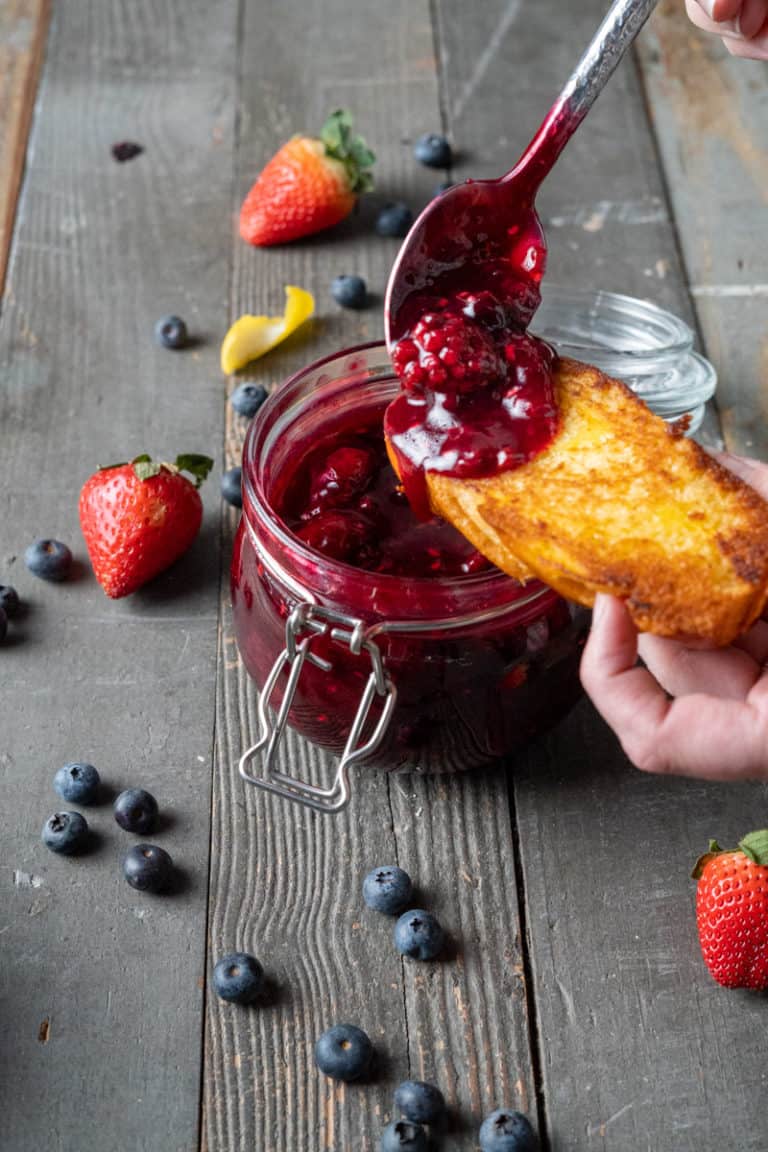
We find ourselves making this compote almost every time we have leftover berries from the kids' lunchboxes. It's a fantastic way to cut down on food waste while whipping up something scrumptious. Trust us, once you try this, you'll be way more excited to see leftover fruit in your fridge. Let's get started!
Jump to:
- Ingredients
- Fresh or Frozen Berries - Which Is Better?
- Equipment List
- Watch How to Make Berry Compote
- Step-by-Step Instructions
- How to Thicken Berry Compote
- Compote vs Coulis
- Tips and Tricks
- Troubleshooting: Common Berry Compote Problems
- Serving Suggestions
- Frequently Asked Questions
- Similar Recipes
- 📖 Recipe
- 💬 Comments
Ingredients
Mixed Berries
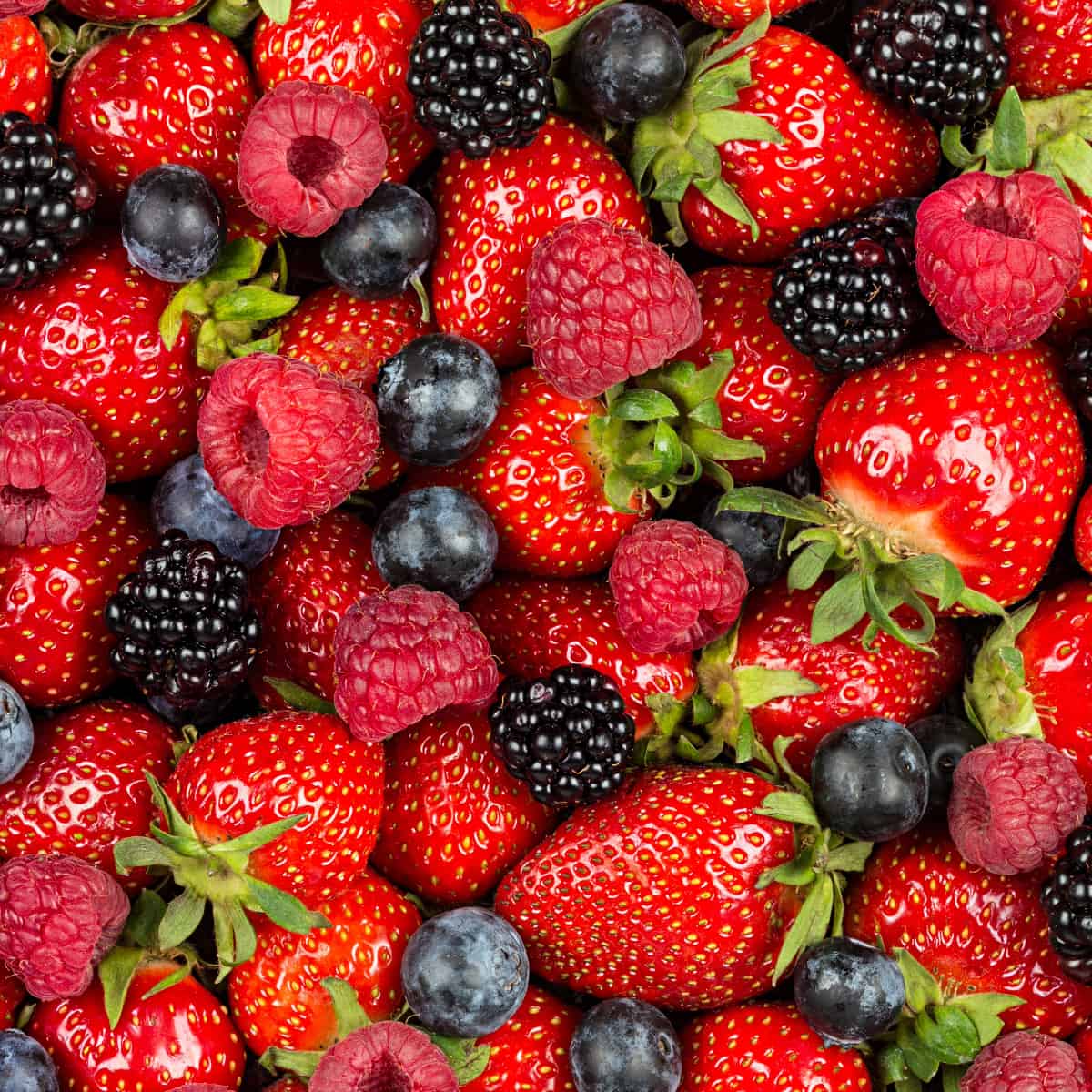
This fruit compote recipe shines with its use of a mix of berries, each adding its own vivid colors and natural sweetness. Whether it's the peak of summer or the middle of winter, you can choose between fresh or frozen berries to suit the season.
Our favorite combination includes fresh strawberries, blueberries, raspberries, and blackberries, blending for a delightful burst of flavors.
Sugar
A little sugar goes a long way in enhancing the flavors. Brown sugar is a great option for a deeper, molasses-like sweetness.
Substitution: Maple syrup can be used as a natural alternative to sugar, adding a rustic, woodsy flavor to the compote.
Fresh Lemon Juice
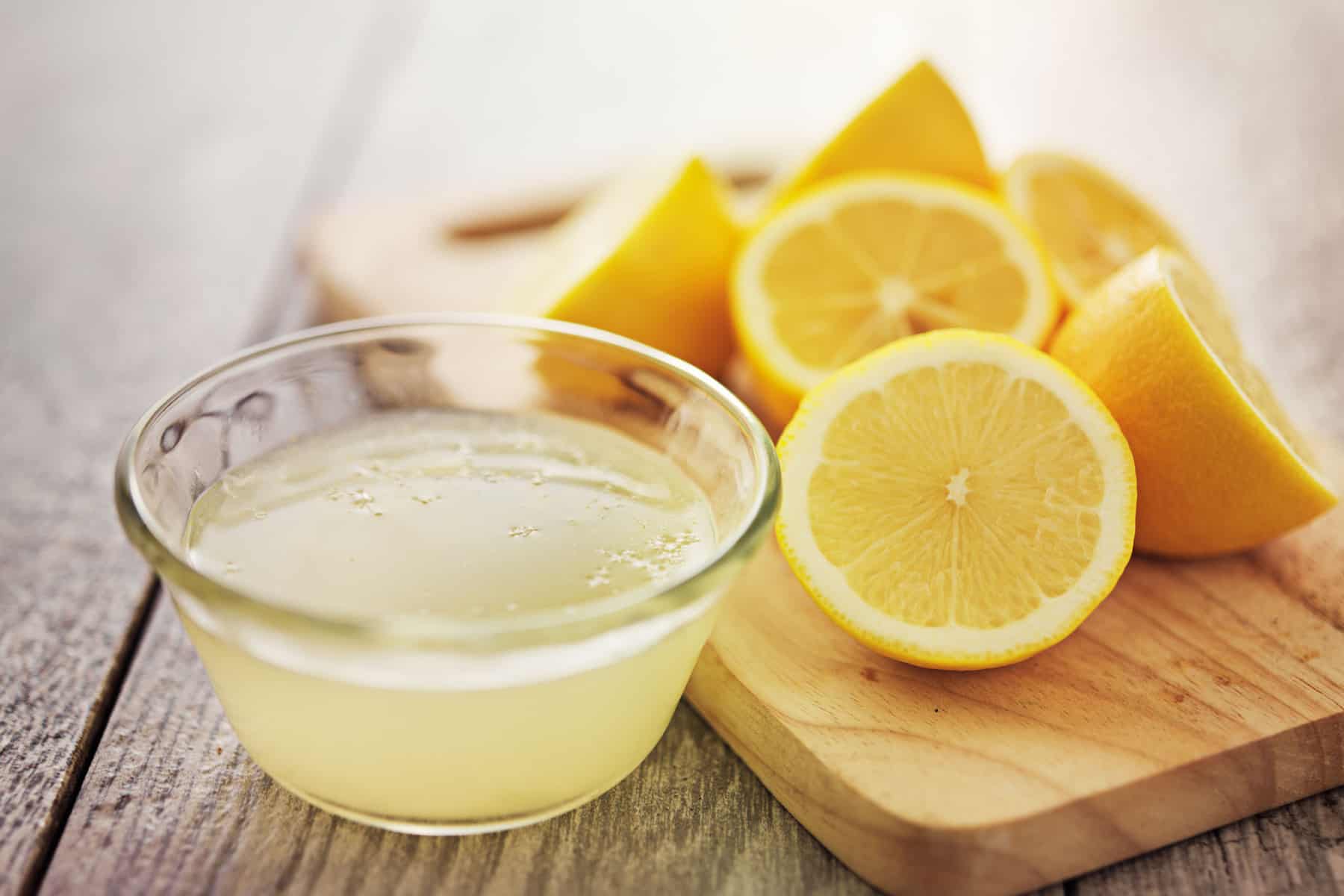
A little lemon juice adds a touch of acidity, balancing out the sweetness. If you're feeling adventurous, try adding some lemon zest or even orange zest for an extra zing.
Vanilla Extract
Vanilla adds body and an extra layer of flavor to the compote. Adding it gives me Disney Berry Compote vibes from when we stayed at Disney's Port Orleans Resort.
Cornstarch
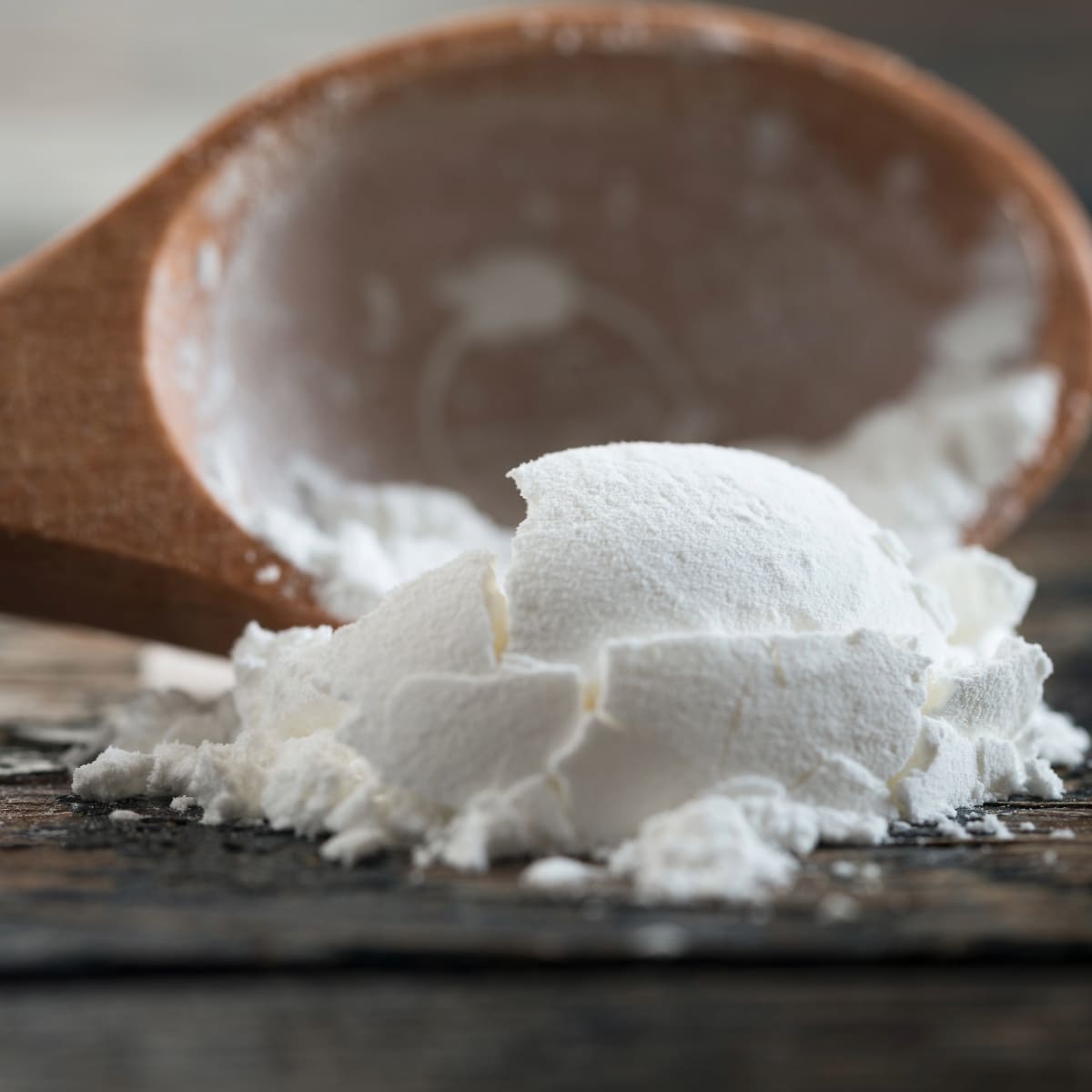
A simple cornstarch mixture is your go-to for thickening up the compote to your desired consistency. However, if you have a corn allergy, this can be left out without much fuss.
Substitutions: If you have a corn allergy, this can be left out. Alternative thickening agents include arrowroot powder or a chia seed slurry.
Add-Ins & Substitutions
Spices: Cinnamon or nutmeg can be added for extra depth.
Salt: A pinch of salt can balance flavors and enhance the natural sweetness of the berries.
Water: A little water can help if you find your sauce reduced to much or thickened too much.
Fresh or Frozen Berries - Which Is Better?
Honestly? Frozen berries are often the better choice for compote - and not just because they're cheaper.
When berries freeze, the water inside their cells expands and breaks the cell walls. The moment they hit the heat, they release juice almost immediately, which means you get a sauce faster and with less risk of scorching. They also tend to hold up better through cooking - fresh berries can turn mushy if you simmer them too long.
Here's how I think about it:
- Use fresh berries when they're in peak season (June-August in most of the US), they're already a little soft and need to be used, or you want the prettiest possible whole-fruit pieces in the finished sauce.
- Use frozen berries when it's any other month of the year, you want a thicker sauce in less time, or you're cooking on a budget. Frozen berries are usually flash-frozen at peak ripeness, which often makes them more flavorful than out-of-season fresh berries.
- Use a combination when you want the best of both - frozen berries break down to make the sauce, while fresh berries hold their shape for that beautiful chunky finish.
No need to thaw frozen berries first. Add them straight to the pot. They'll take an extra 2-3 minutes to come up to a simmer, and you may not need any added water at all.
Equipment List
Medium Saucepan: For simmering the berry mixture.
Wooden Spoon: Perfect for stirring without scratching your saucepan.
Measuring Cups and Spoons: Essential for getting your proportions just right. A kitchen scale is also helpful as we provided fruit weights as well.
Optional: Potato Masher, if you prefer a less chunky fruit sauce.

Watch How to Make Berry Compote
If you'd rather watch than read, here's a quick video walking through the whole process - from raw berries to glossy, jammy sauce in about 10 minutes. Hit play, then scroll down for the full step-by-step recipe below.
Step-by-Step Instructions
Preparing the Berries
In a large bowl, start by washing your fresh berries under cold water. If you're using whole fruit like strawberries, go ahead and cut them into smaller pieces. Once they're clean, and chopped as you're ready!
Combining Ingredients
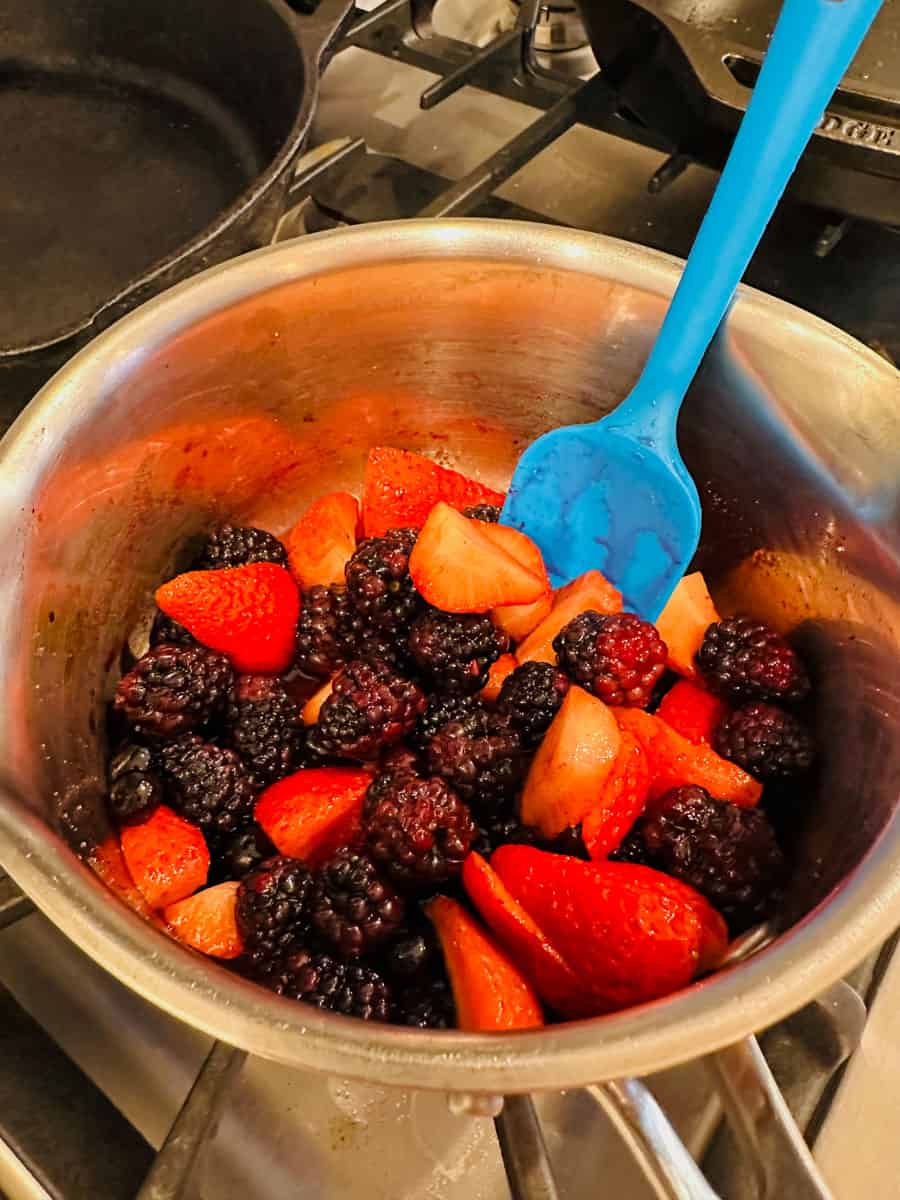
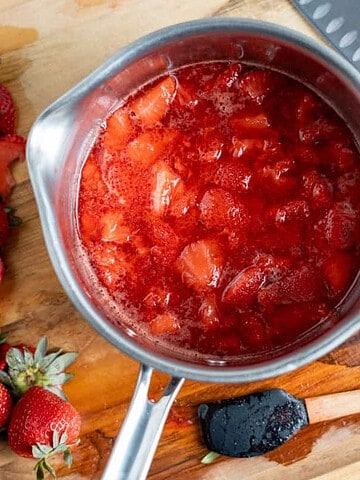
Place your mixed berries, sugar, lemon juice, pinch of salt, and a bit of water into a medium saucepan. Mix all together with a wooden spoon or rubber spatula.
Simmering
Cook the compote mixture over medium heat until it starts to bubble. Reduce the heat to medium-low and let it simmer, stirring occasionally. Once simmering you can add a cornstarch slurry (cornstarch and a splash of water) to thicken. Remember to mix continuously as you add your slurry to make sure you don't get cornstarch clumps.
We also like to smush some of our berries to add body to the sauce. However, leaving some of the larger blackberries or strawberries whole will give the finished product a beautiful finish.
Last add your vanilla, taste, and add another pinch of salt if needed.
Cooling and Storing
Room Temperature: Once your compote is done cooking, remove it from the heat and allow it to cool to room temperature. This is important because cooling it too quickly can affect its texture and flavor.
Stir Occasionally: As it cools, give it a gentle stir every now and then with a wooden spoon. This helps with cooling and prevents skin from forming on the top.
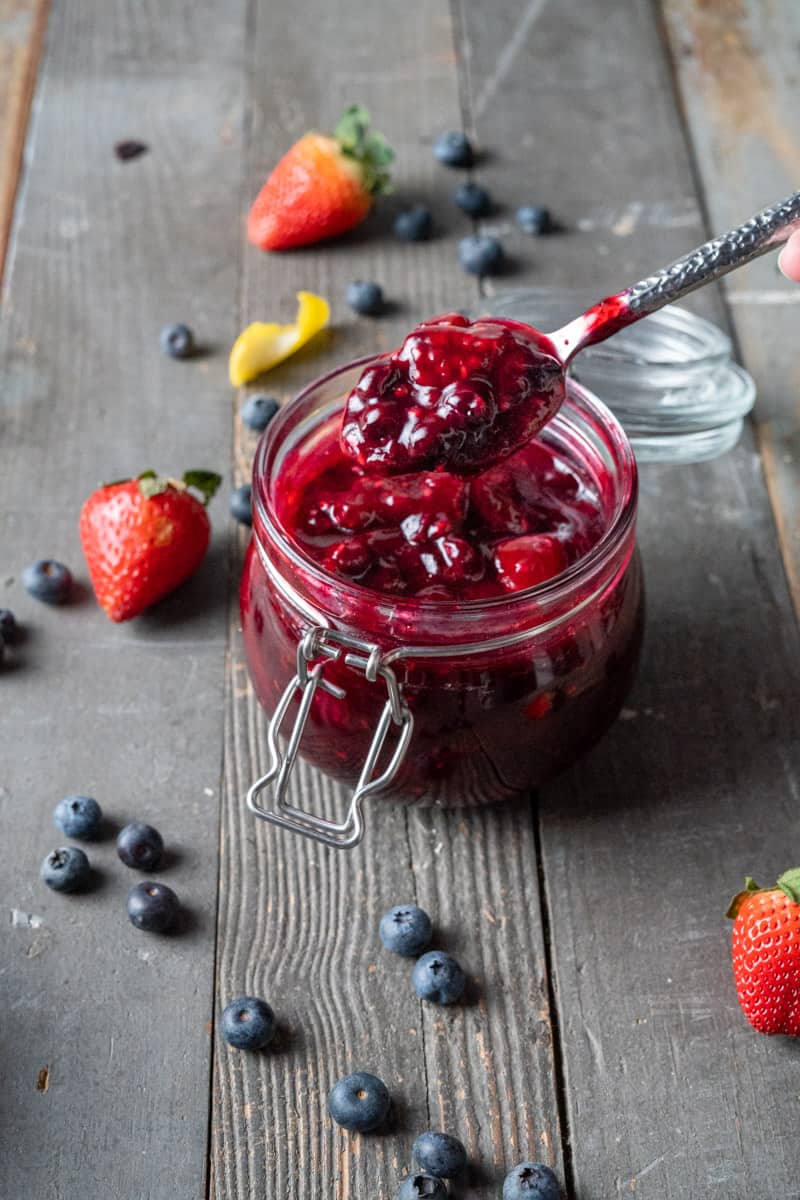
Storing Your Compote
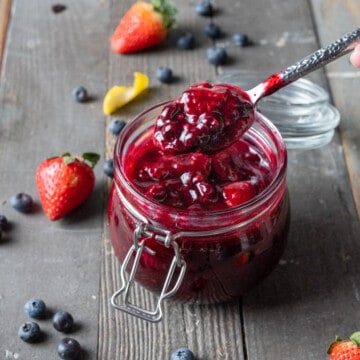
Airtight Container: Transfer the cooled berry compote into an airtight container. Mason jars work wonderfully for this and add a rustic touch. I also love glass pop-top-style containers with a rubber seal.
Refrigeration: Store your compote in the refrigerator for about a week.
Freezing: For longer storage, you can also freeze the compote. Just make sure to leave a little bit of space at the top of your container for expansion.
Label and Date: Labeling and dating your stored items is always a good idea. That way, you'll know exactly when you made it and how long it's been stored.
How to Thicken Berry Compote
A loose, syrupy compote is great over yogurt or pancakes. A thick, glossy compote is what you want for cheesecake, between cake layers, or as a danish filling. Here's how to control the texture:
| Method | How to use | Best for |
|---|---|---|
| Reduce longer | Simmer 3–5 extra minutes | Anything — purest method, no add-ins |
| Cornstarch slurry | 1 tablespoon cornstarch + 1 tablespoon cold water, whisk in at the end | Cake fillings, cheesecake, danishes |
| Arrowroot slurry | Same ratio as cornstarch, gluten-free | When you want extra glossy finish |
| Chia seeds | 1–2 teaspoon stirred in off the heat, rest 10 min | Yogurt swirl, healthier set, adds fiber |
| Mash some berries | Press a third of the berries against the pan | Naturally thicker without extra ingredients |
A little patience goes a long way - the compote thickens significantly as it cools, so don't over-thicken on the stove. If it's the consistency of a slightly loose syrup when warm, it'll be perfect cold.
Compote vs Coulis
Both compote and coulis are fruit-based sauces. They generally use similar ingredients like fresh or frozen fruit, sugar, and some form of citrus juice like lemon or orange juice. Ever wondered what sets a compote apart from a coulis, jam, jelly, or preserve? Let's break it down:
Differences
Texture: Compote is a chunky fruit sauce that retains pieces of the original fruit. Coulis, on the other hand, is a smooth, strained sauce.
Cooking: Compotes are usually cooked, allowing the natural pectin in the fruit to thicken the sauce. Coulis can be cooked or raw, often requiring additional thickeners like simple syrup.
Use: Compote is versatile, and great as a topping for breakfast foods or desserts. Coulis is often used as a decorative drizzle or a base for other sauces.
Compote vs. Jam, Jelly, & Preserves
Jam: Made from crushed fruit and sugar, cooked down to a spreadable consistency. It's less chunky than compote but not as smooth as jelly.
Jelly: Made from fruit juice and sugar, resulting in a clear, smooth spread.
Preserves: Similar to jam but contains larger chunks of fruit or whole fruit, like berries.
Tips and Tricks
Sweetness: Adjust the sugar to your liking. Fruit that is in season, and at its peak of ripeness is naturally more sweet. This means you could use less added sugar or even substitute alternatives like coconut sugar if you prefer.
Thickening: A cornstarch slurry or chia seeds can be added for a thicker sauce.
Variations: Feel free to experiment with different ways to flavor your compote. Orange juice can be used instead of lemon for a different twist.
Troubleshooting: Common Berry Compote Problems
Most issues with berry compote come down to a few simple causes. Here's a quick reference for the most common ones and how to fix them:
| Problem | Why it happened | How to fix it |
|---|---|---|
| Too runny | Not enough cooking time, or too much liquid | Simmer 3–5 more minutes, or add a cornstarch slurry |
| Too thick / pasty | Over-reduced or too much cornstarch | Stir in 1–2 tablespoon warm water until loose |
| Too sweet | Berries were already very ripe | Add a small squeeze of lemon juice — it cuts the sweetness instantly |
| Too tart | Underripe berries (often early-spring or frozen mixes) | Add another teaspoon of sugar at a time and stir |
| Tastes flat | Missing the salt or the lemon | Add a pinch of salt and a few drops of lemon juice off the heat |
| Bitter aftertaste | Burned on the bottom of the pan | Unfortunately you can't rescue scorched compote — start over with a heavier pot and lower heat |
| Skin formed on top | Cooled without stirring | Stir it back in — it's harmless, just unattractive |
| Cornstarch lumps | Added dry cornstarch to hot liquid | Always make a slurry first; if you have lumps, strain through a fine-mesh sieve |
| Berries lost their color | Cooked too long or too hot | Pull off the heat sooner next time; medium-low is your friend |
Serving Suggestions

This delicious sauce is the perfect topping for a range of dishes. Here are some of our favorites:
Breakfast: French toast, pancakes, or chia puddings.
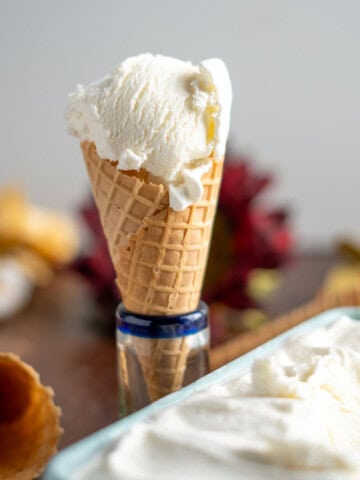
Desserts: Vanilla ice cream, pound cake, or angel food cake topped with whipped cream.
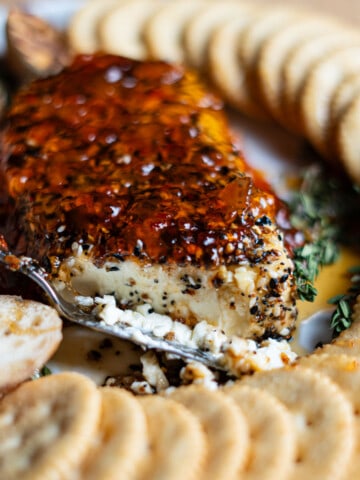
Others: It even works as a delicious dessert sauce over brie on a cheese board or as a simple cocktail syrup.
This easy mixed berry compote recipe is a great way to add a burst of flavor to various dishes. It's a simple sauce made from simple steps, and it's the perfect way to use fresh fruit or clean out all your leftover frozen berries. So, give it a try for the first time, and don't forget to leave a star rating on the recipe card!
Frequently Asked Questions
Compote is cooked briefly with less sugar, leaving the fruit chunky and the sauce loose. Jam is cooked longer with more sugar (and often pectin) until thick and spreadable. Compote keeps for about a week in the fridge; jam keeps for months.
Yes. If your berries are very ripe, you can skip sugar entirely or add a tablespoon of honey or maple syrup at the end. The compote will be thinner and won't keep as long (about 5 days) since sugar acts as a preservative.
Absolutely - and they often work better. Frozen berries release juice faster and give you a thicker sauce. Add them straight from the freezer; you may not need any extra water. Cook 2-3 minutes longer than you would for fresh.
Usually it just needs a few more minutes on the stove. Compote also thickens significantly as it cools, so let it sit for 10-15 minutes before deciding. If it's still loose, whisk in a cornstarch slurry (1 tablespoon cornstarch + 1 tablespoon cold water).
About 7-10 days in an airtight container. For longer storage, freeze it in glass jars or silicone ice cube trays for up to 3 months.
This recipe isn't formulated for water-bath canning - the sugar content is too low for shelf-stable preservation. If you want a canned berry preserve, look for a tested jam recipe with proper sugar ratios. For everyday use, refrigerator and freezer storage are the way.
A mix is best - strawberries for body, blueberries for jamminess, raspberries for brightness, blackberries for depth. But a single berry works too. Strawberry, blueberry, and raspberry compotes all use this same base method.
Yes, and it's gorgeous on top of cheesecake. For cheesecake, I recommend thickening it with a cornstarch slurry so it sits prettily on top instead of running off.
Technically no, but I always add it. Lemon juice brightens the flavor so the sauce tastes like berries instead of just sweet, and it helps the natural pectin in the fruit set the sauce as it cools.
Three options: simmer 5 more minutes to reduce naturally, mash some of the berries to release more pectin, or stir in 1-2 teaspoons of chia seeds off the heat and let it sit 10 minutes.
Similar Recipes
📖 Recipe
Berry Compote
Equipment
- 1 Pot
Ingredients
- 6 oz Strawberries
- 6 oz Blueberries
- 2 oz Raspberries
- 2 oz Blackberries
- ¼ cup Granulated Sugar
- 1 teaspoon Lemon Juice
- ¼ teaspoon Vanilla Extract
- Water
- 1 tablespoon Cornstarch - optional
- pinch Kosher Salt
Instructions
- In a small pot mix everything except the vanilla & the cornstarch.
- Cook on medium-low heat for 5 minutes, stirring every minute.
- Once removed from heat, add your vanilla & taste.
- If you prefer your sauce to be thicker in consistency, pour a small about of liquid from your compote into a small bowl and mix it with the cornstarch.
- Slowly mix your cornstarch/berry mixture back into your sauce until it coats the back of your spatula or spoon.
- Enjoy it right away, or store it in a sealed container in the fridge.
Nutrition
Nutrition information is an estimate, calculated from the listed ingredients, and provided as a courtesy.









Comments
No Comments