
This post may contain affiliate links. As an Amazon Associate I earn from qualifying purchases.
Meringue frosting is easier to make in real life than you think. All you need is motivation. It only takes about 15 minutes to make, it costs under $2, and it is an absolute show-stopper.
Meringue Frosting at a Glance
Quick reference for what you're about to make:
- Type: Italian-style cooked meringue (sweetened egg whites heated to 155°F)
- Ingredients: 4 (egg whites, sugar, water, cream of tartar)
- Time: 25 minutes total
- Best for: cakes, cupcakes, pies, s'mores-style desserts
- Special trick: torchable for that classic toasted marshmallow finish
- Texture: light, fluffy, stable enough to pipe and hold shape
Jump to:
- Meringue Frosting at a Glance
- 🛒 Ingredients
- 📖 Instructions
- Incorporating Air
- 🎥 Video
- 🎂 Decorating Your Cake or Cupcake
- 🔥 Toasting Your Meringue Frosting
- 👩🏼🍳 Chef Tip
- What's the Difference Between Meringue Frosting and Buttercream?
- How Long Does Meringue Frosting Last?
- Why Is My Meringue Frosting Not Stiffening?
- Can You Make Meringue Frosting Ahead of Time?
- Frequently Asked Questions
- 📖 Recipe
- 💬 Comments
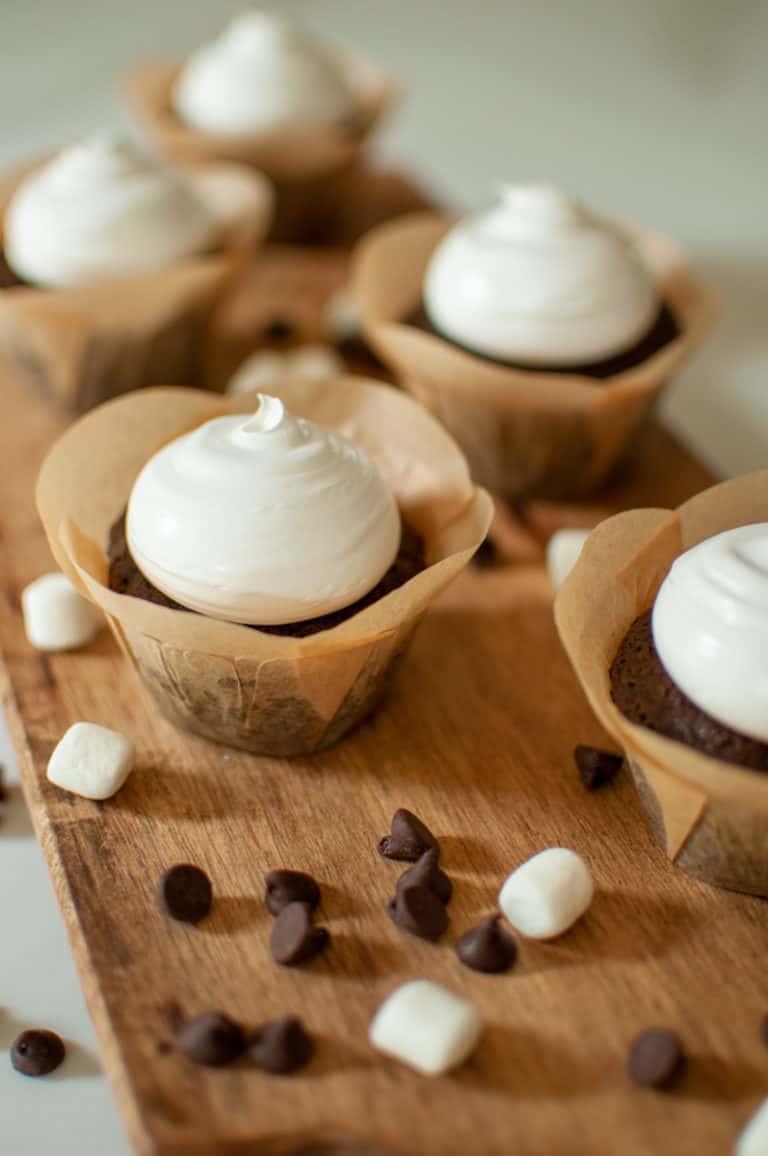
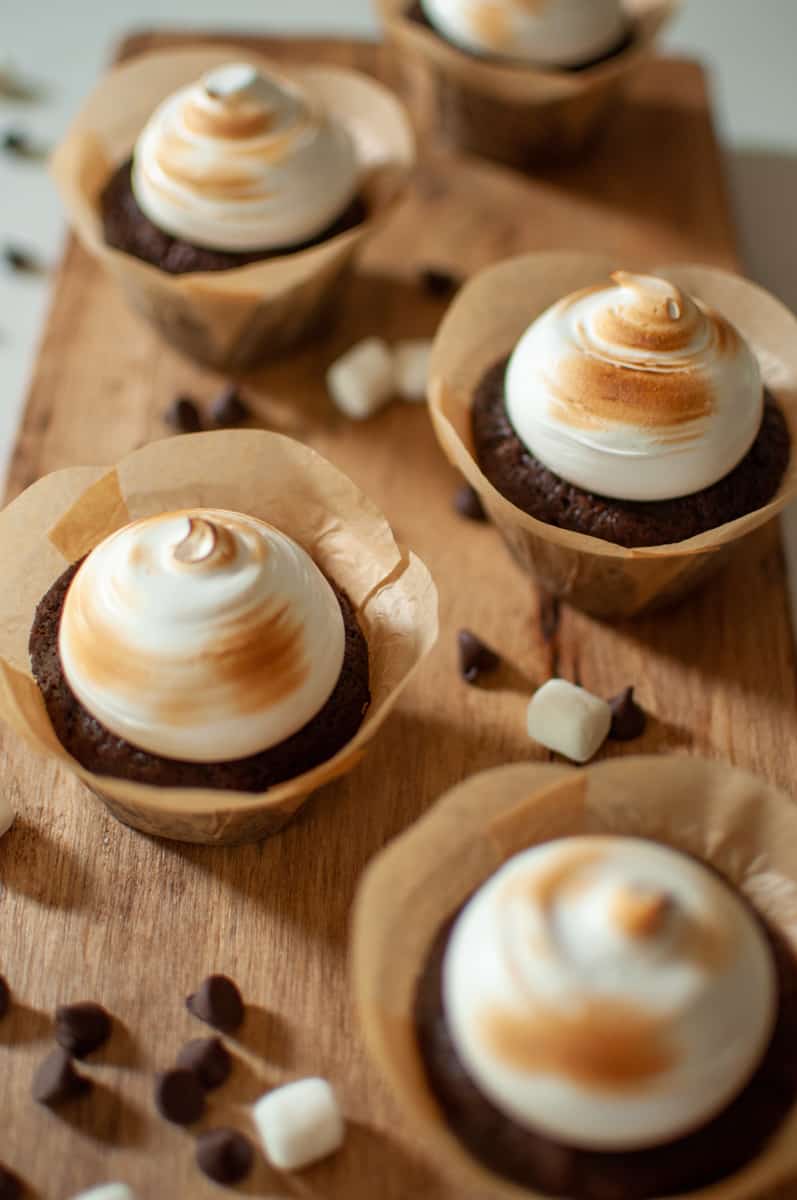
This is my absolute favorite recipe for my fall favorite s'mores cakes & cupcakes, so be prepared for lots of pictures of those in this post. This was also the first week I started using my DSLR camera and I was so proud of how these images were turning out. It will be funny to look back at these years from now and judge them...
🛒 Ingredients
- Egg Whites
- Vanilla
- Sugar
- Cream of Tartar
This recipe is only 4 ingredients. Cream of Tartar is the weird one that throws most people off. Basically, cream of tartar stabilizes the egg whites so they don't collapse or fall. Imagine making a beautiful light frosting and then coming back in a few hours and it's a pile of sticky goo.
Now, for me, one of the reasons this recipe seems more complicated in my head than it actually is in person is because of the egg whites. Don't panic. As long as you have a thermometer to help you confirm we've reached the right temperature, you will be JUST FINE. To make that happen you need to set up a double boiler...
📖 Instructions
Following the directions in the recipe below, add the egg whites, sugar, and cream of tartar in a heatproof bowl and give it a mix. This could be a glass bowl or your metal KitchenAid Mixer bowl.
Place your bowl on top of a small pot of simmering water, making your own double boiler setup. In its simplest form, a double boiler is a pot with around 1" of water in it, simmering. This setup is meant to very gently cook whatever you are making. In this case, we are trying to avoid cooking the egg whites so much that they turn white (like an omelet).
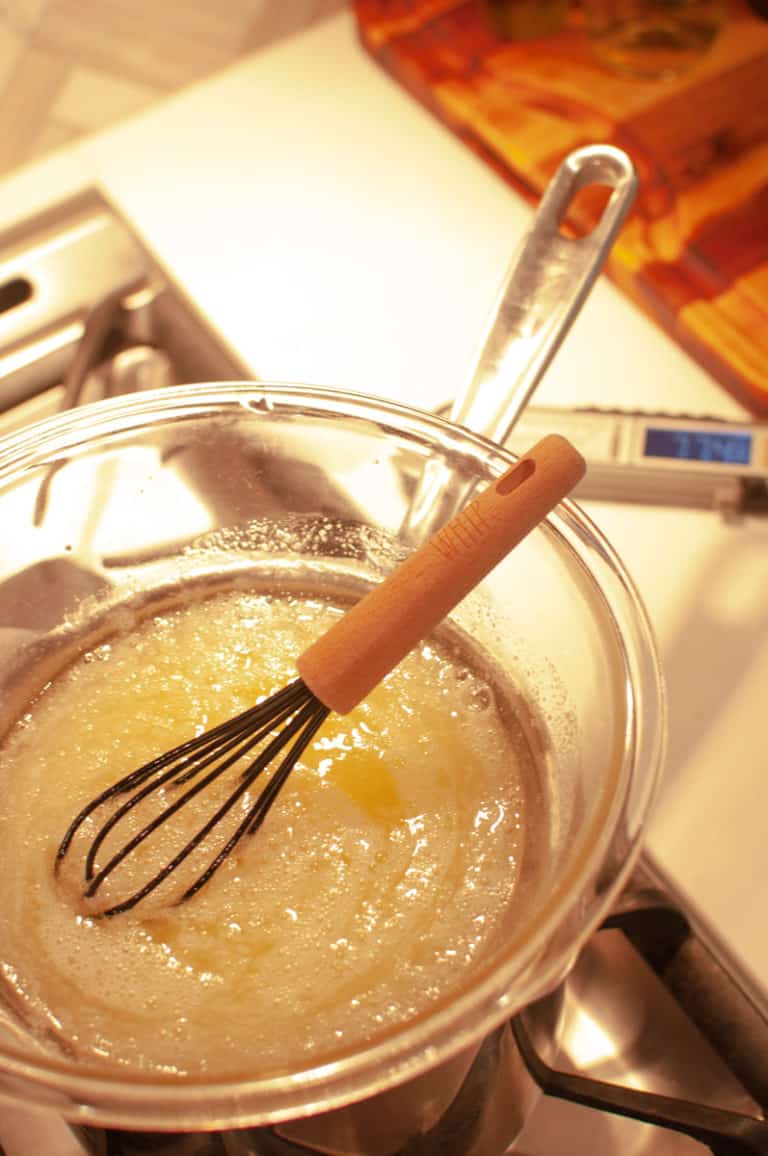
We need to heat the sweetened egg white mixture to 155 degrees. Reason #1, killing any bacteria in the egg whites. #2, dissolving the granulated sugar. If we can do both of those things, without turning them into sweet scrambled eggs, we'll be smooth sailing from here.
Incorporating Air
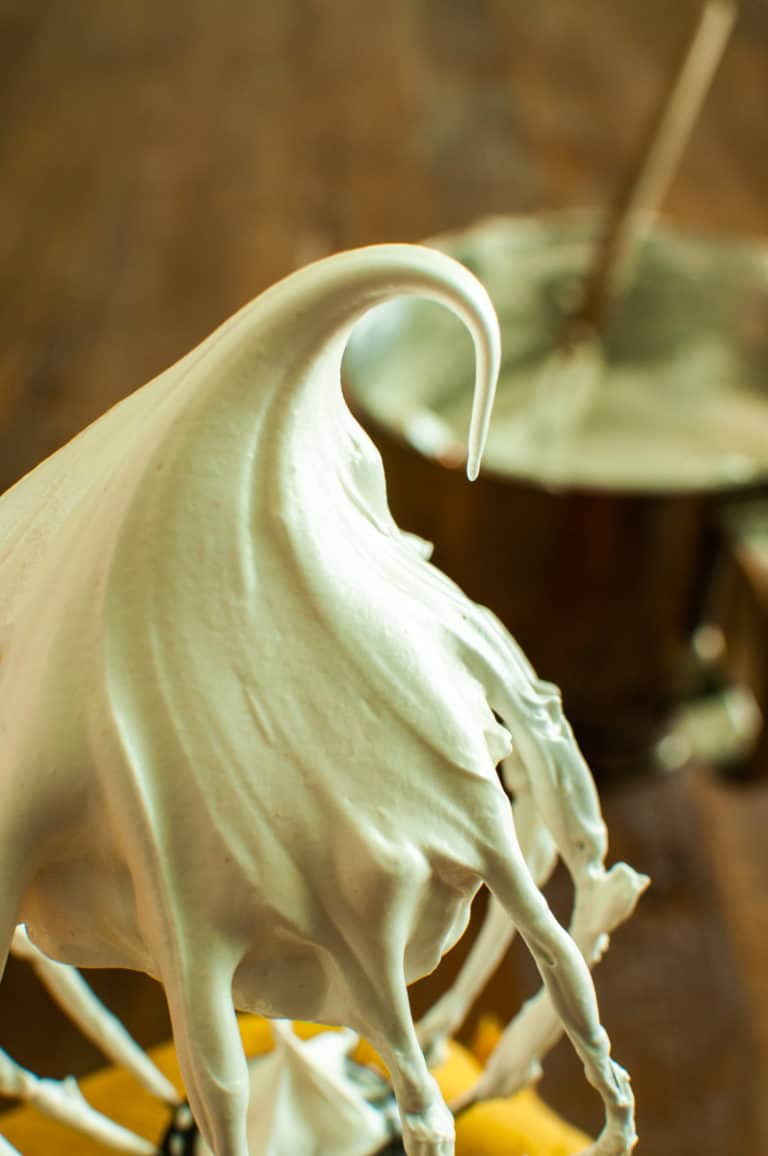
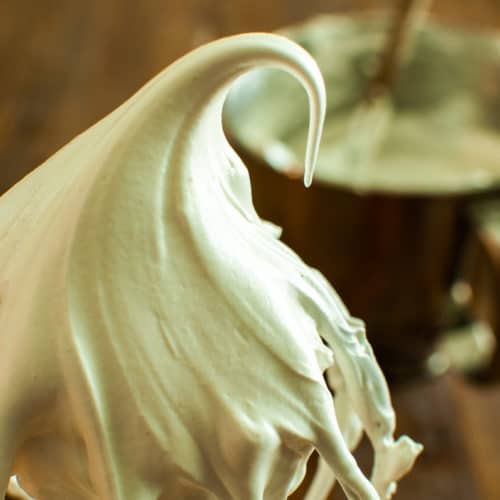
Once you've achieved 155 degrees, you will move your sweet egg white mixture over to your mixer fitted with your whisk attachment. Add your vanilla and start whipping your meringue base on high for 3-5 minutes. Each mixer is different but the foolproof way to tell if it's done is by taking your beater and flipping it upside down to see if your peak falls over or stays point straight up.
Soft Peak: When turned on its side, or upside down the tip of the frosting will be soft and fall over. This is ideal for recipes like homemade whipped cream.
Stiff Peak: A perfectly stiff peak stays in the exact same shape when turned to the side or flipped over.
🎥 Video
🎂 Decorating Your Cake or Cupcake
Your frosting is ready! I 100% recommend using a pastry bag with just a simple round tip if you're making this meringue for cupcakes. The frosting comes out gorgeously smooth, and it's actually so much easier to work.
If you are still looking for a super yummy cake recipe to make alongside this frosting I'm pretty obsessed with our Chocolate Espresso Cake recipe.
🔥 Toasting Your Meringue Frosting
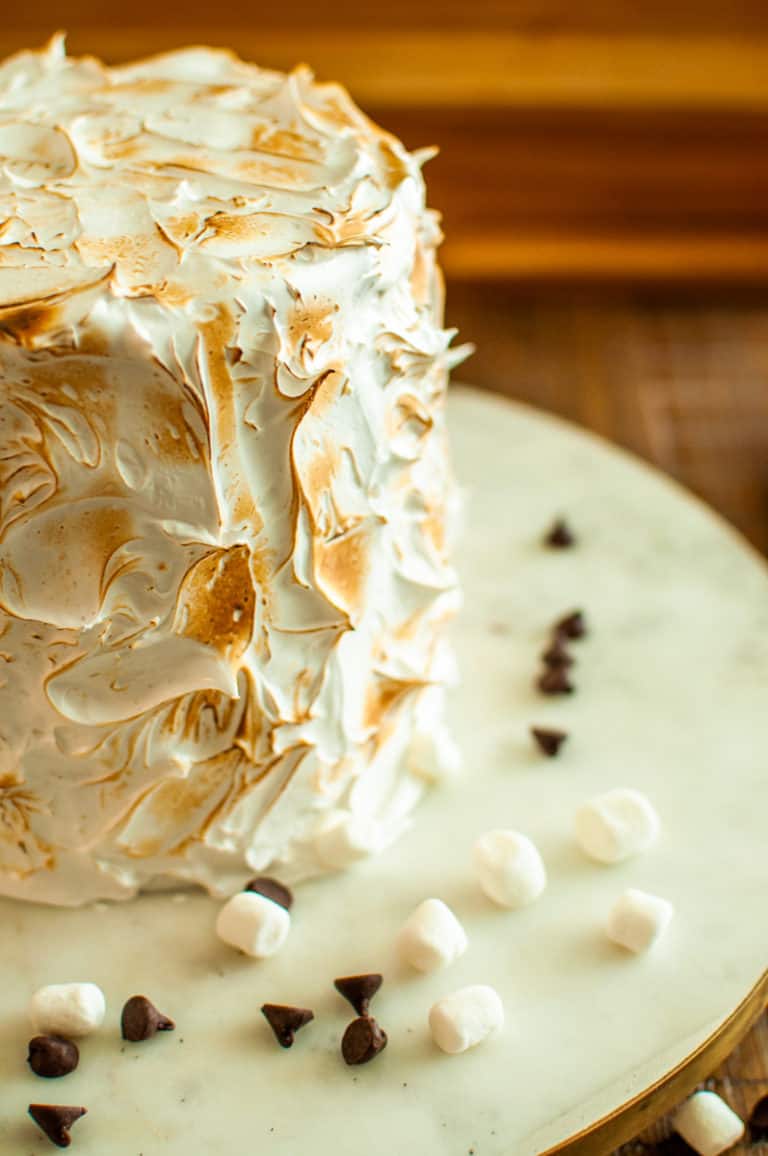
Using my trusty creme brulee torch, I start far away and come in closer until I achieve the level of brown I like. There is a little bit of a learning curve but feel free to watch the video!
👩🏼🍳 Chef Tip
#1 When toasting your meringue, start by holding the torch far away and getting closer slowly. It can burn quickly!
#2 Owning an instant read temperature is incredibly helpful in this recipe and so many others. If you're like me and are bad at buying things for yourself, add it to your wish/birthday list!
What's the Difference Between Meringue Frosting and Buttercream?
The biggest difference is fat content. Buttercream is mostly butter and powdered sugar - rich, dense, and stable at room temperature. Meringue frosting is whipped egg whites and sugar - light, airy, fluffy, and lower in calories. Texture-wise: buttercream is creamy; meringue frosting is marshmallow-like.
Use buttercream when you need stability for piping intricate designs or when transporting cakes long distances. Use meringue frosting when you want a lighter texture, less sweetness, and that beautiful glossy finish that toasts beautifully under a torch.
How Long Does Meringue Frosting Last?
Meringue frosting is best used within 24 hours - its texture starts breaking down after that. Once on a cake, it holds beautifully for 1-2 days at room temperature in a covered cake dome. Don't refrigerate frosted cakes if possible - the moisture creates condensation that ruins the glossy texture.
Unfrosted meringue frosting doesn't freeze well - the egg whites separate from the sugar syrup. If you have leftovers, your best bet is to use them within a day or pipe them into kisses on parchment paper and bake at 200°F for 2 hours to make crunchy meringue cookies.
Why Is My Meringue Frosting Not Stiffening?
The most common culprits when meringue frosting won't stiffen:
- Yolk contamination - even a speck of egg yolk in your egg whites prevents them from whipping. Separate eggs one at a time over a small bowl to avoid ruining the whole batch.
- Greasy bowl or beaters - fat is the enemy of meringue. Wipe your bowl and beaters with white vinegar or lemon juice first to ensure they're completely fat-free.
- Plastic bowl - plastic retains oils. Use a stainless steel, copper, or glass bowl for best results.
- Adding sugar too fast - add sugar gradually while the mixer is running so it dissolves evenly. Too fast and the meringue collapses.
- Old eggs - fresher eggs whip up better and hold their structure longer.
Can You Make Meringue Frosting Ahead of Time?
Honestly, no - meringue frosting is best made fresh. Within a few hours of whipping, it starts to deflate and separate. If you must prep ahead, you can:
- Pre-measure ingredients - separate eggs and measure sugar 1 day ahead, refrigerated
- Make up to 2 hours ahead - covered with plastic wrap touching the surface, at room temperature
- For parties, frost the cake just before serving for best appearance
If you need a frosting that holds up for days in advance, Italian meringue buttercream is more stable since it incorporates butter into the cooked meringue base.
Frequently Asked Questions
Italian meringue is one TYPE of meringue frosting. There are three main types: French (raw egg whites whipped with sugar), Italian (egg whites whipped with hot sugar syrup), and Swiss (egg whites and sugar warmed together, then whipped). Italian and Swiss are most common for frosting because they use heat to stabilize and pasteurize the eggs.
Yes - pasteurized egg whites from a carton work great and eliminate any salmonella risk. They take a bit longer to whip up to stiff peaks because they've been heat-treated, but the final texture is identical. This is especially good for kids, pregnant women, or immunocompromised people.
Traditional French meringue uses raw egg whites which carries a small salmonella risk. Italian and Swiss meringue heat the eggs to safe temperatures (160°F+) during preparation, making them food-safe. For absolute safety, use pasteurized egg whites or stick to Italian/Swiss methods.
A kitchen torch held 4-6 inches from the surface, moved in slow circles, gives you that beautiful golden brown finish in seconds. If you don't have a torch, you can broil for 30-60 seconds - but watch CLOSELY because it goes from white to burnt fast.
Yes! Meringue frosting pipes beautifully - its fluffy structure holds shape well for star tips, swirls, and rosettes. Just be quicker than you would with buttercream because meringue can deflate slightly with extended handling.
Weeping happens when meringue is overcooked, undercooked, or sits in a warm humid environment. Make sure your sugar is fully dissolved before whipping (no graininess), and serve in a cool environment. If using over a baked dessert, applying directly to the surface (no gap) helps prevent weeping.
📖 Recipe
Meringue Frosting
Equipment
- Mini Torch optional
Ingredients
- 5 Egg Whites
- 1 ¼ cup Granulated Sugar
- ¾ teaspoon Cream of Tartar
- 2 teaspoon Vanilla Extract
Instructions
- Separate the egg whites from the egg yolks. I highly suggest doing this in a small bowl one by one, then adding them to your larger bowl. This will prevent you from accidentally getting any yolk mixed in.
- In a medium/large glass bowl, mix together the sugar, cream of tartar, and egg whites.
- Place your bowl on top of a pot of simmering water. An inch of water will do here. We are looking for a double-boiler kind of situation.
- Using a small whisk or spatula, mix the egg whites slowly until it reaches around 155 degrees. I highly recommend a digital thermometer for this!
- Once you're at temp, remove your bowl off the stove (be careful the bottom and sides will be hot) and add your vanilla extract.
- Using an electric mixer, whisk your sugary egg whites for 3-5 minutes or until you have nice stiff peaks.
- Frosting will be very sticky. Using a pastry bag is the easiest way to apply your frosting but not necessary.
- If you'd like to toast your marshmallow meringue, decorate your cake or cupcakes as desired, and then using a mini torch toast the edges/sides/peaks until you are happy with your masterpiece.
Video
Notes
- Spotless bowl: Any grease keeps the whites from whipping, so start with a clean, dry, glass or metal bowl.
- Heat to 155°F over the double boiler. A thermometer takes the guesswork out, and it makes the whites safe to eat.
- Whip to stiff, glossy peaks - that's your structure.
- Use it the same day. Meringue doesn't hold up overnight.
- Torch the peaks for that toasted-marshmallow finish.
Nutrition
Nutrition information is an estimate, calculated from the listed ingredients, and provided as a courtesy.





Comments
No Comments